





The Automation Wave: Colombo’s Entry-Level Tech Reset
A new wave of change is washing over Colombo’s tech industry. This wave is automation, powered by Artificial Intelligence (AI). New tools can now perform many tasks that people used to do, especially in entry-level positions. This shift is changing the very first step on the career ladder for many young tech professionals in Sri Lanka.

Jobs that involve repetitive tasks are the most affected. Think of roles like basic data entry, manual software testing, or simple website updates. These tasks follow clear rules, which makes them easy for AI to learn and perform quickly and without errors. As companies adopt these tools, they need fewer people for traditional junior roles that focus on manual work.
However, this is not a story about job loss. It is a story about a “reset.” While some old entry points into the tech world are closing, new and more exciting ones are opening. The focus is shifting from doing repetitive work to using tools that do it for you. Companies now need people who can think critically, solve complex problems, and work alongside AI systems. This change is impacting how every web design industry adapts to the AI age.
This new environment demands a different set of skills. Instead of just following instructions, new workers must be ready to manage automated processes and interpret the data they produce. This is a chance to move away from low-skill tasks and toward higher-value work. Embracing this change is key for the future, with a growing need for skills in specialized fields like AI-powered business solutions.
Bridging the Chasm: From Redundant Skills to AI Proficiency
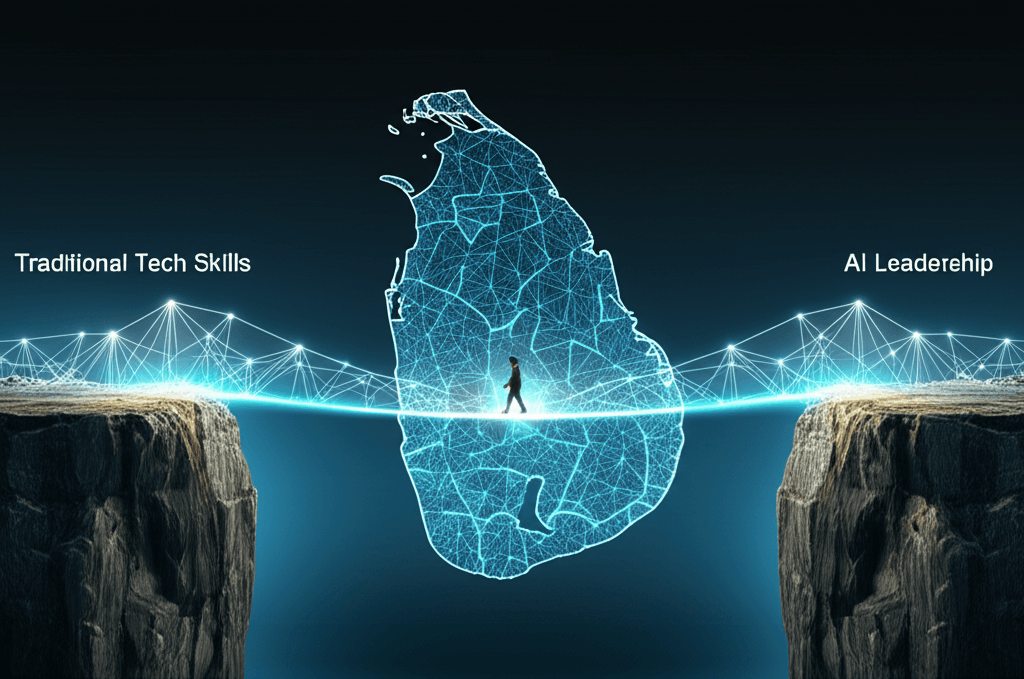
The rise of AI has created a gap between old tech skills and new industry demands. Many routine tasks, like writing basic code, simple graphic design, and data entry, are now being automated. For Colombo’s tech professionals, this is not an end but a turning point. The challenge is to cross the bridge from skills that are becoming redundant to those that offer AI proficiency. This shift is less about being replaced and more about evolving into a new, more strategic role.
The first step is to honestly look at your current job. Identify tasks that are repetitive and could be done by an AI tool. This is not a threat but an opportunity to upskill. Instead of focusing on what AI can do, focus on what it cannot. AI lacks genuine creativity, emotional intelligence, and complex critical thinking. These human-centric skills are now more valuable than ever. The goal is to learn how to manage AI tools, using them to handle the simple work so you can focus on strategy and innovation.
Building new skills is the next vital step. This means learning about prompt engineering, machine learning concepts, and data analysis. You don’t need to become a top AI developer overnight. Start by using AI tools in your current work. Learn how to ask them the right questions to get better results. This practical experience is key to building confidence and expertise. As industries change, understanding how your field adapts to the AI age is crucial for survival and growth.
Ultimately, this transition opens doors to exciting new career paths. Roles like AI integration specialist, AI ethics officer, and machine learning manager are in high demand. These positions combine technical knowledge with human oversight. For those willing to learn, the journey from a junior role to a leader in AI development is a realistic goal. By embracing continuous learning, Colombo’s workforce can successfully bridge the chasm and lead Sri Lanka’s tech future.
Forging the Future: Education and Industry’s Response
Colombo is not standing still as automation changes the tech world. Education centers and tech companies are working hard to prepare for an AI-driven future. They understand that to move from entry-level roles to leadership positions, the workforce must adapt. This means focusing on skills that machines cannot easily replicate.

Universities and education and training institutes are revamping their programs. The focus is shifting from basic coding and data entry to more complex areas. Courses in machine learning, data science, AI ethics, and strategic thinking are becoming standard. The aim is to produce graduates who can design, manage, and innovate with AI systems, rather than compete with them for simple tasks. This ensures the next generation of tech workers is ready for higher-level challenges.
At the same time, tech companies are investing in their current employees. Many businesses are launching upskilling programs to teach staff how to work with AI tools. For example, developers are learning to use AI assistants to write and debug code more efficiently. Companies are also reskilling workers for entirely new roles, such as AI specialists or automation managers. This commitment to internal training helps businesses retain valuable talent and stay ahead of the curve.
The key to success is collaboration. Stronger partnerships between universities and the private sector are creating a direct pipeline of skilled talent. Internships, workshops, and guest lectures from industry leaders give students practical insights. By working together, Colombo’s education and industry sectors are turning the challenge of automation into an opportunity to build a stronger, more skilled workforce ready for leadership in AI development.
Colombo’s New Dawn: Emerging as a Niche AI Powerhouse
While automation is changing some jobs, Colombo is turning this challenge into a big opportunity. The city is not trying to compete with global giants in every area of Artificial Intelligence (AI). Instead, it is becoming a smart player by focusing on special, targeted areas. This strategy is helping Colombo build a reputation as a niche AI powerhouse, creating high-value roles for its tech workforce.

What does this mean in practice? It means local tech companies are developing specific AI solutions that solve real problems for businesses. For example, they are creating tools that help online stores grow. By using AI, an e-commerce website can show each visitor products they are most likely to buy. This kind of AI personalization boosts sales for Sri Lankan retailers and helps them compete globally. This focus on practical applications is where Colombo’s tech talent is finding new strength.
This shift is creating exciting new jobs. Instead of routine tasks, professionals are now training AI models, analyzing data to find business trends, and building custom systems. These skills are in high demand and pay better. Key sectors like tourism, apparel, and finance are benefiting from these local AI advancements. They can use AI-powered chatbots for better customer service or data analysis to make smarter decisions.
By concentrating on specific AI fields, Colombo is building a sustainable future for its tech industry. This smart approach ensures that the workforce evolves and gains valuable new skills. The city is proving that adapting to change is the key to leadership in the new age of technology. To learn more, explore the AI development services in Sri Lanka that are driving this transformation.
References
- World Economic Forum. (2023). Future of Jobs Report 2023. – Provides global insights into how AI and automation are reshaping the workforce, skills demand, and job markets.
- “SLASSCOM unveils ambitious ‘Vision 2030’ to propel Sri Lanka’s IT/BPM sector”. Daily FT. – An overview of the strategic vision for Sri Lanka’s technology sector, emphasizing growth through new technologies.
- Daugherty, P. & Wilson, H. J. (2023). “How to Upskill Your Team for the Age of AI”. Harvard Business Review. – Discusses practical strategies for retraining and developing employees to thrive in an AI-driven workplace.
- Wikipedia. “Technological unemployment”. – Offers a broad historical and economic context for the displacement of jobs by technological innovation, including automation and AI.