




The AI Disruption: Understanding the 300,000 Jobs at Risk
The rise of Artificial Intelligence (AI) brings both excitement and concern. A major talking point is the prediction that up to 300,000 jobs in Sri Lanka could be affected. While this number seems large, it is crucial to understand which roles are at risk and why. This change isn’t about eliminating work, but shifting the nature of the jobs available.

The jobs most likely to be impacted by AI are those that involve repetitive, predictable tasks. This includes roles common in the Business Process Outsourcing (BPO) sector, such as basic data entry, standard customer service calls, and simple transaction processing. For a long time, these positions have been a cornerstone of employment for many Sri Lankans. Today, AI tools can perform these duties quickly and accurately, often at a lower cost.
This disruption is driven by technology that streamlines business operations. However, this is only one side of the coin. The challenge highlights AI’s double edge: while it automates routine tasks, it also creates a strong demand for new, higher-level skills. The focus must now shift from performing repetitive work to managing, overseeing, and improving the AI systems that handle it. For Sri Lanka’s workforce, adapting to this new landscape is the key to turning this challenge into an opportunity.
The Creation Wave: How AI Forges 2 Million New Opportunities
While the news often focuses on jobs AI might replace, the real story is about growth. For every job that changes, many more are being created. Think of it not as an ending, but as a major upgrade for Sri Lanka’s workforce. This shift opens the door to an estimated 2 million new roles, turning the challenge of automation into a massive opportunity.

What do these new jobs look like? They are roles we couldn’t have imagined a decade ago. We now need AI specialists to build and manage smart systems, data scientists to find patterns in information, and prompt engineers who are experts at talking to AI. There are also new jobs like AI trainers, who teach machines, and AI ethics officers, who make sure technology is used fairly.
This wave of creation is especially powerful for Sri Lanka’s BPO and tech sectors. Companies are no longer just looking for data entry clerks. They need people who can oversee automated processes, analyze AI-driven customer insights, and manage complex digital systems. This means workers can move into higher-skilled, better-paying positions. An employee who once answered simple customer questions can now train an AI chatbot to help thousands of people at once.
The numbers speak for themselves. The potential loss of 300,000 jobs is small compared to the 2 million new opportunities on the horizon. This isn’t just about replacing old jobs; it’s about creating a stronger, more skilled economy. Understanding AI’s double edge between job losses and new high-skill roles is the first step. By embracing this change, Sri Lanka can secure its place in the future of work and build a more prosperous future for its people.
The Strategic Pivot: Future-Proofing Sri Lanka’s BPO Sector
The rise of Artificial Intelligence presents a clear choice for Sri Lanka’s Business Process Outsourcing (BPO) sector: adapt or be left behind. While AI can automate routine tasks like data entry and basic customer support, it also creates a massive opportunity. The key to success is a strategic pivot from low-skill, repetitive work to high-value, complex services. This shift ensures the BPO industry not only survives but thrives in the new digital age.
Instead of competing with AI, the future lies in working with it. Sri Lanka can position itself as a hub for specialized skills that complement automation. This means focusing on roles where human intelligence is essential. These new BPO services could include:
* AI and Data Supervision: Managing and training AI systems to ensure they perform correctly and ethically.
* Complex Customer Support: Handling sensitive or complicated customer issues that require empathy and advanced problem-solving skills.
* Business Process Optimization: Analyzing data from AI tools to help clients improve their efficiency and strategy.
* Specialized Digital Marketing: Creating and managing sophisticated online marketing campaigns that AI can support but not lead.
To make this pivot, upskilling the workforce is crucial. The jobs of the future will demand new talents in data analysis, digital literacy, and AI management. By investing in training and development, Sri Lankan BPO companies can prepare their employees for these new roles. This transition from basic tasks to specialized knowledge work is not just about saving jobs; it’s about creating better, more secure, and higher-paying careers. As discussed in AI’s Double Edge: Job Losses vs New High-Skill Roles, embracing technology leads to more advanced opportunities. By making this strategic shift, Sri Lanka’s BPO sector can secure a prosperous and future-proof place in the global economy.

Beyond BPO: AI’s Ripple Effect Across Sri Lanka’s Economy
While the conversation about AI often focuses on the BPO sector, its impact is spreading across Sri Lanka’s entire economy. This ripple effect is transforming traditional industries and creating new paths for growth. From the tea estates in the hill country to the bustling markets of Colombo, AI is becoming a powerful tool for innovation and efficiency.
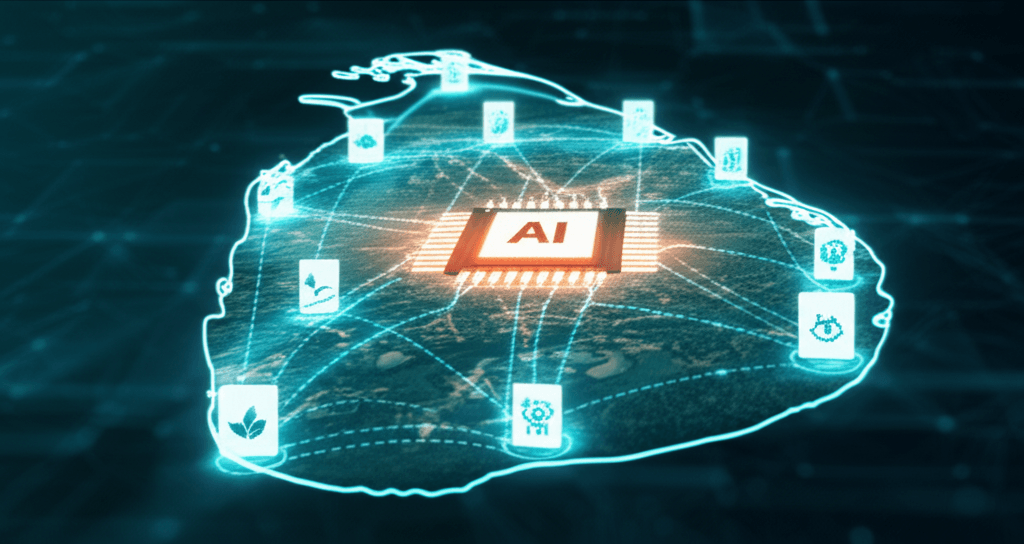
In agriculture, one of Sri Lanka’s core sectors, AI helps farmers with precision farming. Drones and sensors gather data on soil health and crop growth, leading to better yields and less waste. This helps our vital spice and tea exporters compete globally. Similarly, the tourism industry is using AI to create personalized experiences for travelers. Hotels and travel agencies can now offer unique recommendations and seamless booking services, boosting a critical part of our national income. A strong online presence is key, which involves optimizing websites for high performance to attract international visitors.
The retail and e-commerce landscape is also changing rapidly. Local businesses are using AI to understand customer behavior better. This allows them to offer personalized product suggestions and manage their inventory more effectively. By adopting these smart technologies, even small and medium-sized enterprises (SMEs) can improve sales and reach new customers. For example, AI personalization is helping local retailers boost conversions and expand into global markets.
This widespread adoption of AI is building a more resilient and diverse economy. It empowers businesses of all sizes to become more productive and competitive. The new jobs and opportunities created in these sectors are proof that AI’s positive impact goes far beyond just one industry, promising a brighter economic future for all Sri Lankans.
- The Future of Jobs Report 2023 – World Economic Forum – Provides global context on technology’s impact on jobs, highlighting the dynamic of job displacement and creation across various industries.
- SLASSCOM Industry Reports and Insights – The official portal for reports from Sri Lanka’s national chamber for the IT/BPM industry, offering specific data and future outlooks for the local sector.
- The economic potential of generative AI – McKinsey & Company – An in-depth analysis of how generative AI is poised to transform industries, automate tasks, and create new roles, underpinning the ‘net positive’ argument.
- Economy of Sri Lanka – Wikipedia – A general overview of Sri Lanka’s economic structure, key sectors, and historical performance, providing background for the BPO industry’s significance.