




The digital marketplace has fundamentally reshaped how Sri Lankan enterprises connect with customers both locally and globally. As we navigate through 2026, e-commerce has evolved from a supplementary sales channel into the primary engine driving business growth across the nation. With Sri Lanka’s e-commerce sector projected to generate revenues exceeding US$3.5 billion and user penetration climbing toward 15%, the opportunity for businesses to capitalise on this digital revolution has never been more compelling.
At Mobiz International, we have partnered with hundreds of businesses throughout Colombo, Kandy, Galle, and across Sri Lanka to build thriving online ventures. This comprehensive guide distils our expertise into actionable insights that will help your business navigate the complexities of modern e-commerce.
Understanding E-Commerce in Today’s Digital Economy
Electronic commerce encompasses the entire ecosystem of online commercial transactions, from product discovery through payment processing and fulfilment. Unlike traditional retail constrained by physical boundaries and operating hours, e-commerce empowers businesses to serve customers across time zones, offering round-the-clock accessibility that modern consumers demand.
The global e-commerce landscape continues its remarkable expansion, with worldwide online sales projected to reach US$6.88 trillion in 2026, representing over 21% of total retail transactions. This growth trajectory reflects a fundamental shift in consumer behaviour, with over three billion people worldwide now making regular online purchases.
For Sri Lankan enterprises, this transformation presents exceptional opportunities. The nation’s digital economy has grown to contribute over 5% to GDP, driven by expanding internet penetration that now exceeds 60% of the population and the widespread adoption of smartphones and digital payment solutions.
E-Commerce Business Models Driving Success in 2026
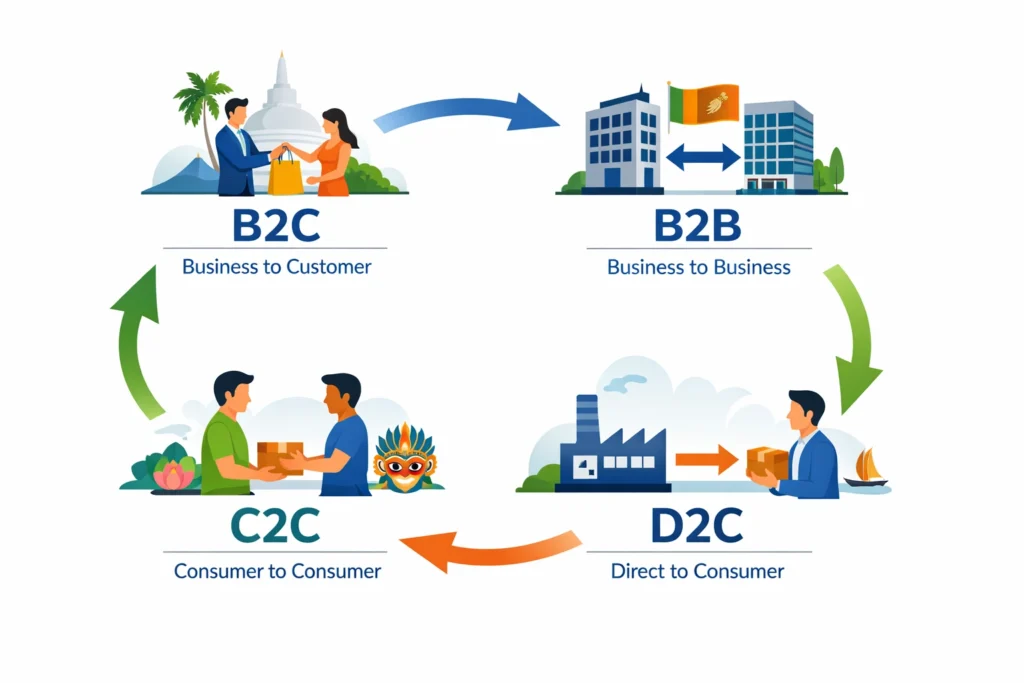
Understanding the various e-commerce frameworks is essential for selecting the approach that aligns with your business objectives and target market. Each model presents distinct advantages and considerations for Sri Lankan enterprises.
Business-to-Consumer (B2C)
The most prevalent model in Sri Lanka, B2C e-commerce involves selling directly to individual consumers through online storefronts. This approach suits retailers across categories including fashion, electronics, groceries, and lifestyle products. Platforms like Daraz, Kapruka, and countless independent online stores exemplify this model, offering consumers convenience and competitive pricing whilst providing businesses with direct customer relationships and valuable data insights.
Business-to-Business (B2B)
B2B e-commerce facilitates transactions between organisations, from manufacturers to wholesalers to retailers. This segment is experiencing explosive growth, with the global B2B e-commerce market projected to exceed US$36 trillion by 2026. Sri Lankan exporters in textiles, tea, spices, and manufactured goods are increasingly leveraging B2B platforms to reach international buyers efficiently.
Consumer-to-Consumer (C2C)
Peer-to-peer marketplaces enable individuals to buy and sell amongst themselves, with platforms providing the infrastructure and trust mechanisms. In Sri Lanka, platforms like ikman.lk and Facebook Marketplace have cultivated thriving C2C ecosystems, particularly for pre-owned goods and local services.
Direct-to-Consumer (D2C)
Manufacturers and brands increasingly bypass traditional retail intermediaries to sell directly to end consumers. This approach offers greater margin control, direct customer relationships, and valuable first-party data. Sri Lankan apparel brands and artisan producers are embracing D2C strategies to build authentic connections with global audiences.
How E-Commerce Functions: The Complete Transaction Journey
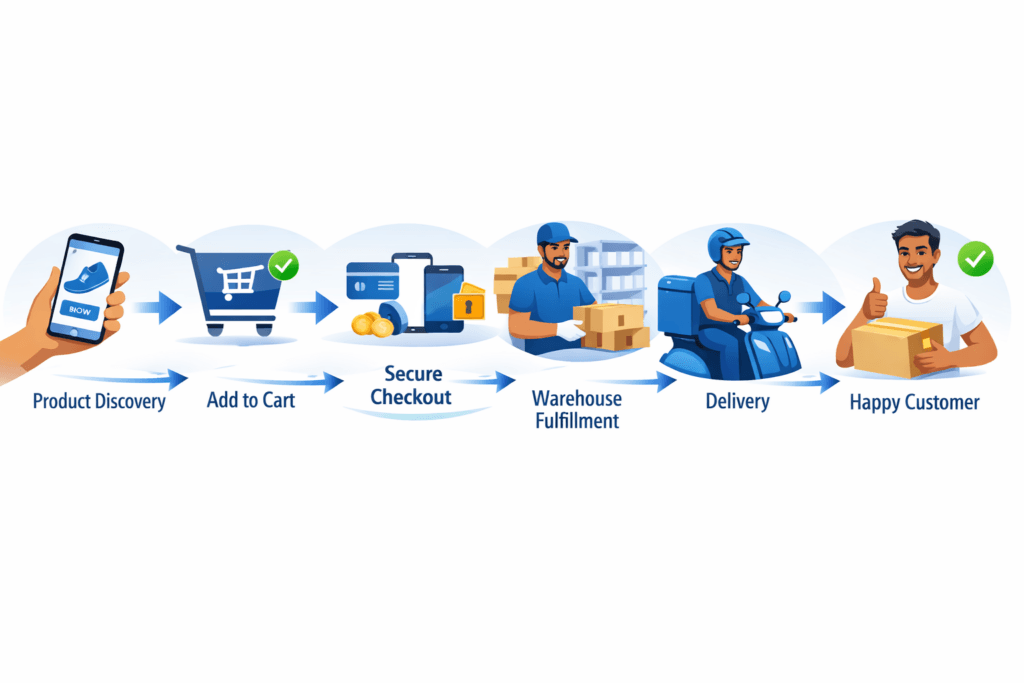
A successful e-commerce operation requires seamless coordination across multiple interconnected systems. Understanding each stage of the customer journey enables businesses to optimise their digital presence for maximum conversion and satisfaction.
- Product Discovery and Browsing: Customers explore your offerings through search engines, social media, marketplace listings, or direct website visits. Compelling product imagery, detailed descriptions, and intuitive navigation guide their journey.
- Cart Management and Checkout: Shoppers add items to their virtual cart and proceed through a streamlined checkout process. Reducing friction at this stage through guest checkout options, saved payment methods, and clear progress indicators significantly impacts conversion rates.
- Payment Processing: Secure payment gateways facilitate transactions through credit cards, digital wallets, bank transfers, or cash-on-delivery arrangements. Multiple payment options accommodate diverse customer preferences.
- Order Fulfilment: Behind the scenes, inventory management systems update stock levels, warehouse teams prepare shipments, and logistics partners transport products to customers. Real-time tracking keeps buyers informed throughout.
- Post-Purchase Experience: The relationship continues with delivery confirmation, customer support, return handling if needed, review solicitation, and remarketing to encourage repeat purchases.
Selecting the Optimal E-Commerce Platform
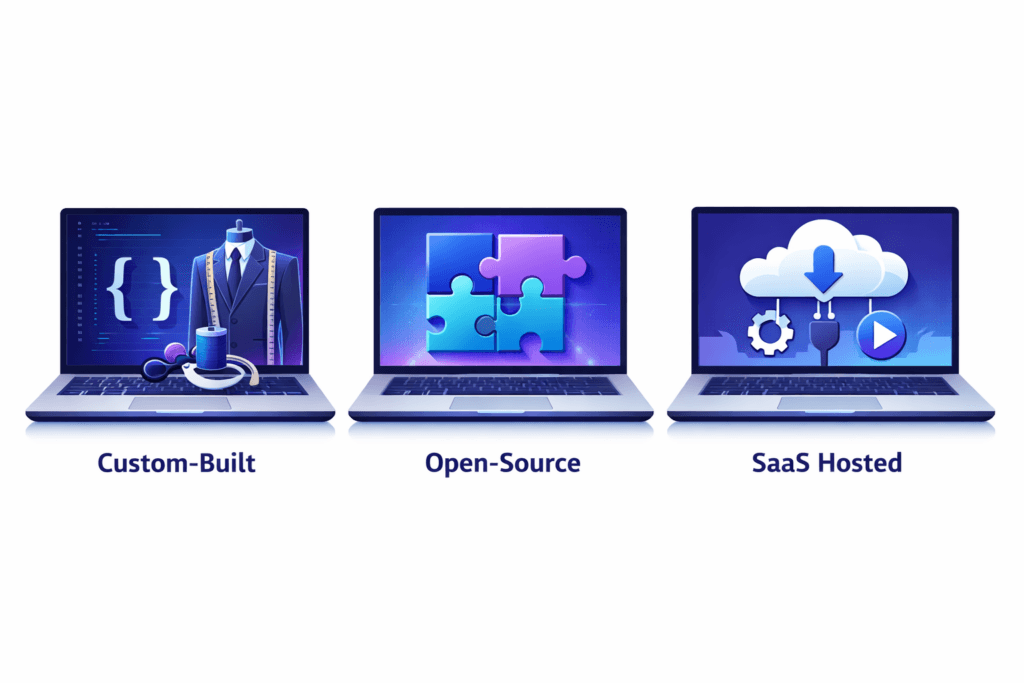
Your platform choice establishes the foundation for your entire digital commerce operation. Sri Lankan businesses must evaluate options against their specific requirements, technical capabilities, and growth aspirations.
Custom-Built Solutions
Bespoke platforms developed specifically for your business offer unlimited flexibility and complete ownership. Ideal for enterprises with unique requirements, complex integrations, or competitive advantages requiring proprietary technology. At Mobiz International, we specialise in crafting custom e-commerce solutions that precisely match Sri Lankan business needs.
Open-Source Platforms
Solutions like WooCommerce, Magento, and PrestaShop provide robust functionality with extensive customisation possibilities. These platforms suit businesses seeking control over their infrastructure whilst benefiting from active developer communities and abundant plugins.
Hosted SaaS Solutions
Platforms like Shopify and BigCommerce offer turnkey solutions with managed hosting, security, and updates. These options enable rapid deployment and reduced technical overhead, making them attractive for businesses prioritising speed to market.
Key Selection Criteria for Sri Lankan Businesses
- Integration capabilities with local payment gateways including PayHere, DirectPay, and LankaPay
- Support for Sri Lankan Rupee pricing alongside multi-currency transactions
- Multilingual functionality for Sinhala, Tamil, and English content
- Local or regional hosting for optimal page load performance
- Scalability to accommodate business growth
- Available technical support within compatible time zones
Essential Features for Sri Lankan E-Commerce Excellence
Success in Sri Lanka’s digital marketplace demands attention to localised requirements that distinguish your store from international competitors.
Comprehensive Payment Integration

Sri Lankan consumers increasingly embrace digital payments, with mobile wallets and digital transactions experiencing rapid adoption following the Central Bank’s digital payments initiatives. Your platform should accommodate local payment gateways like PayHere, DirectPay, and LankaPay, while also supporting international cards, digital wallets such as Genie and FriMi, and cash-on-delivery options that remain popular, particularly in areas with emerging digital infrastructure.
Mobile-First Architecture

Mobile commerce now accounts for approximately 60% of global e-commerce transactions, with smartphones generating over 75% of retail website traffic. Sri Lankan shoppers, particularly younger demographics, predominantly browse and purchase via mobile devices. Your platform must deliver flawless responsive experiences, touch-optimised interfaces, and streamlined mobile checkout processes to capture this audience effectively.
Multilingual Content Management
Serving Sri Lanka’s diverse linguistic landscape requires content in Sinhala, Tamil, and English. Proper multilingual implementation extends beyond translation to encompass culturally appropriate messaging, localised imagery, and format considerations for each language.
Robust Security Infrastructure
Consumer trust remains paramount in Sri Lanka’s evolving e-commerce landscape. Essential security measures include SSL certification for encrypted transactions, PCI DSS compliance for payment processing, secure customer data handling aligned with emerging data protection standards, and transparent privacy policies that build confidence in your platform.
Performance Optimisation
Despite improving connectivity, internet speeds vary significantly across Sri Lanka’s regions. Optimised image compression, efficient code architecture, content delivery network utilisation, and progressive loading techniques ensure your store performs well for customers in Colombo and remote areas alike.
E-Commerce Trends Shaping 2026 and Beyond

Forward-thinking businesses must anticipate and adapt to emerging trends that will define competitive advantage in the coming years.
Artificial Intelligence and Personalisation

AI has transformed from experimental technology into core e-commerce infrastructure. Intelligent systems now power dynamic pricing, inventory forecasting, personalised product recommendations, and conversational customer support through sophisticated chatbots. Research indicates that brands effectively leveraging AI for personalisation will outperform competitors by 25% in profitability. Sri Lankan businesses can access these capabilities through increasingly accessible AI-powered tools and platform integrations.
Social Commerce Expansion

The boundaries between social media and shopping continue dissolving. Instagram, Facebook, TikTok, and YouTube have evolved into full-featured commerce platforms where discovery, evaluation, and purchase occur seamlessly. Global social commerce is projected to exceed US$1 trillion in 2026. Sri Lankan businesses must establish shoppable presences across platforms where their target audiences congregate, leveraging live shopping, influencer partnerships, and user-generated content to drive conversions.
Agentic Commerce and Conversational AI
The emergence of AI shopping agents represents the most significant shift since mobile commerce. Sophisticated AI assistants now help customers compare products, check inventory, optimise purchases, and complete transactions through natural conversation. Businesses must prepare their digital infrastructure to interact not only with human customers but with AI agents acting on their behalf.
Omnichannel Integration
Consumers expect seamless experiences across online stores, mobile apps, social platforms, and physical locations. Unified commerce approaches that synchronise inventory, customer data, pricing, and promotions across all touchpoints have become essential. Research shows that 75% of shoppers purchase in-store after online research, whilst 65% research online before physical purchases.
Sustainability and Conscious Commerce
Environmental consciousness increasingly influences purchasing decisions, particularly among urban Sri Lankan consumers. Nearly 80% of consumers globally make efforts to purchase from brands aligned with their values. E-commerce businesses emphasising sustainable packaging, ethical sourcing, and environmentally responsible operations can differentiate themselves whilst contributing to broader social goals.
Augmented Reality Shopping
AR technology enables customers to visualise products in their environments before purchase, from furniture placement to virtual clothing try-ons. This capability reduces return rates whilst increasing purchase confidence. As AR tools become more accessible, Sri Lankan retailers can leverage these technologies to enhance customer experiences.
Navigating E-Commerce Challenges in Sri Lanka

While opportunities abound, Sri Lankan businesses must address several challenges to achieve e-commerce success.
Building Digital Trust
Consumer confidence in online transactions continues developing. Businesses can accelerate trust-building through prominent security credentials, authentic customer reviews, clear return policies, and responsive customer service. Transparency regarding product sourcing, shipping timelines, and business credentials further establishes credibility.
Logistics and Fulfilment
Efficient last-mile delivery remains challenging across Sri Lanka’s diverse geography. Partnering with reliable courier services, offering multiple delivery options, providing accurate tracking, and managing customer expectations through clear communication helps overcome logistical constraints. Same-day and next-day delivery capabilities in urban areas can provide competitive advantages.
Payment Infrastructure
While digital payment adoption accelerates, cash-on-delivery remains important for many customers. Successful businesses accommodate diverse payment preferences whilst encouraging digital adoption through incentives and education. The government’s digital payment promotion initiatives continue expanding infrastructure and awareness.
Cybersecurity Considerations
E-commerce platforms face persistent security threats, with the sector experiencing significant cyber-attack volumes globally. Implementing robust security protocols, maintaining current software updates, conducting regular security audits, and training staff on security best practices protects both business operations and customer data.
Partnering with Mobiz International for E-Commerce Success

As Sri Lanka’s award-winning web design and development agency, Mobiz International provides comprehensive e-commerce solutions engineered for local market success whilst enabling global reach.
Custom E-Commerce Development
- Bespoke platforms tailored to your unique business requirements
- Native integration with Sri Lankan payment gateways and logistics providers
- Mobile-optimised, responsive designs for all devices
- Performance-optimised architecture for Sri Lankan connectivity conditions
Strategic Consulting
- Business model selection and market positioning guidance
- Competitive analysis and differentiation strategies
- Digital marketing and customer acquisition planning
- Growth roadmaps aligned with market trends
Ongoing Technical Support
- Continuous platform maintenance and security updates
- Performance monitoring and optimisation
- Feature enhancements and scalability upgrades
- Dedicated local support team in your time zone
Digital Marketing Excellence
- Search engine optimisation targeting Sri Lankan and international audiences
- Social media strategy and campaign management
- Performance advertising across Google and social platforms
- Analytics implementation and conversion optimisation
Seizing the E-Commerce Opportunity
The convergence of expanding internet access, smartphone proliferation, digital payment adoption, and evolving consumer preferences has created unprecedented opportunities for Sri Lankan businesses to thrive in the digital marketplace. Whether targeting local consumers, diaspora communities, or international markets, e-commerce provides the infrastructure to expand reach, reduce operational costs, and build lasting customer relationships.
Success requires more than simply establishing an online presence. It demands understanding local market nuances, implementing appropriate technologies, delivering exceptional customer experiences, and continuously adapting to emerging trends and consumer expectations.
Ready to transform your business with a powerful e-commerce presence? Contact Mobiz International today to discover how our tailored e-commerce solutions can help your Sri Lankan business thrive in the digital marketplace of 2026 and beyond.
Mobiz International Pvt Ltd is a full-service web design and development company in Sri Lanka, recognised by Clutch.co as a top web design firm. Specialising in e-commerce solutions, responsive web design, SEO, mobile app development, and AI-powered digital solutions, we have served over 300 clients globally and designed 400+ websites since 2010. Visit joomlasrilanka.com to learn more about our comprehensive services.
References
- Statista. (2026). eCommerce Market Sri Lanka [Market Forecast]. Retrieved from https://www.statista.com/outlook/emo/ecommerce/sri-lanka
- Shopify. (2026). Global Ecommerce Sales Growth Report. Retrieved from https://www.shopify.com/blog/global-ecommerce-sales
- U.S. International Trade Administration. (2025). Sri Lanka – eCommerce [Country Commercial Guide]. Retrieved from https://www.trade.gov/country-commercial-guides/sri-lanka-ecommerce
- DHL Express Sri Lanka. (2025). How Sri Lankan B2B & B2C SMEs Can Benefit from E-Commerce Platforms. Retrieved from https://www.dhl.com/discover/en-lk/e-commerce-advice/e-commerce-best-practice/b2b-b2c-sme-sri-lanka-benefit-from-ecommerce
- Humanities and Social Sciences Communications. (2024). Security Matters: Empowering E-Commerce in Sri Lanka Through Customer Insights. Nature Portfolio. Retrieved from https://www.nature.com/articles/s41599-024-03585-2
- eCommerceDB. (2026). E-Commerce Industry in Sri Lanka 2017-2029 [Market Data]. Retrieved from https://ecommercedb.com/markets/lk/all
- Central Bank of Sri Lanka. (2025). Digital Payments Promotion Campaign 2025. Retrieved from https://www.cbsl.gov.lk/en/news/cbsl-launches-the-digital-payments-promotion-campaign-2025
- Maropost. (2025). Top 5 E-Commerce Trends You Can’t Afford to Miss in 2026. Retrieved from https://maropost.com/blog/ecommerce-trends-2026
- Digital Commerce 360. (2025). 10 Ecommerce Trends That Will Shape Online Retail in 2026. Retrieved from https://www.digitalcommerce360.com/2025/12/23/ecommerce-trends-in-2026/
- BigCommerce. (2025). Top Ecommerce Trends to Watch in 2026. Retrieved from https://www.bigcommerce.com/articles/ecommerce/ecommerce-trends/
- Biometric Update. (2025). Sri Lanka Earmarks Millions to Accelerate Digital Transformation in 2026 Budget. Retrieved from https://www.biometricupdate.com/202511/sri-lanka-earmarks-millions-to-accelerate-digital-transformation-in-2026-budget
- Ceylon Public Affairs. (2025). Google Pay in Sri Lanka 2025: What It Means for Everyday Sri Lankans. Retrieved from https://ceylonpublicaffairs.com/what-google-pay-means-for-sri-lankans/
- Akeneo. (2025). 5 Trends That Will Shape the 2026 eCommerce Landscape. Retrieved from https://www.akeneo.com/blog/2026-ecommerce-trends/
- Mordor Intelligence. (2026). Ecommerce Market Size, Trends & Growth Forecast Report 2030. Retrieved from https://www.mordorintelligence.com/industry-reports/global-ecommerce-market