Web Design Sri Lanka: Quality & Cost Savings for You
Picture this: you’ve just opened a web design quote from a local agency, and your jaw is on the floor. It’s a five-figure number, and that’s before adding the features you really want. You start wondering, “Is a professional, custom-built site just completely out of reach for my business?” I’ve seen this exact scenario play out so many times, and it’s incredibly frustrating.
But what if you could get that same level of quality—I’m talking a proper discovery phase, detailed wireframes in Figma, and clean, modern code—for a fraction of that cost? This is where, I think, looking at a partner in Sri Lanka gets really interesting. It’s not about finding the cheapest option on some random freelance platform; it’s about finding a dedicated agency that runs on a professional workflow, just like the expensive team in your city.
So, how do you actually do it without the risk? That’s the big question, right? In this article, I’m going to show you exactly how to vet a Sri Lankan team, what their project management looks like (hint: many use Agile), and how to turn the time zone difference into a genuine advantage for your project. You can get both the savings and the quality.
Why Sri Lanka? The Emerging Hub for High-Quality Web Design
Okay, let’s talk about Sri Lanka. When you think of outsourcing web design, your mind might jump to a few other countries first. I get it. But for the last few years, I’ve seen a significant shift. Smart businesses aren’t just chasing the lowest price tag anymore; they’re looking for value. And honestly, I think Sri Lanka is where the real value is hiding in plain sight. It’s moved beyond being a low-cost option to a hub for genuine quality and partnership.
Beyond the Code: A Pool of Problem Solvers
What really sets the Sri Lankan tech scene apart is the talent. We’re not just talking about people who can write code from a spec sheet. The country has an incredibly high literacy rate, and there’s a strong focus on engineering and computer science in its universities. This creates a workforce of problem solvers. They’re fluent in English, not just in a technical sense, but in a way that makes daily stand-ups and requirement-gathering sessions productive and clear. You’ll find teams deeply skilled in modern frameworks like React and Vue.js for the front-end, and they can handle complex backend architecture with Python or Node.js just as easily.
The ‘Sweet Spot’ Time Zone and Work Ethic
I find the geographic location is a surprisingly practical advantage. The time zone (GMT +5:30) is a sweet spot. It creates a perfect window of overlap with Europe in the morning and Asia/Australia later in the day. This means you can have a real-time conversation and get a full day’s work done on your project while you sleep. Let me give you a real-world example. I had a client in Berlin who needed an urgent fix on their e-commerce checkout flow. Their Sri Lankan team was able to diagnose the issue, deploy a patch, and run tests all before the client’s team in Germany even started their workday. That kind of turnaround is a massive operational plus.
Ultimately, it comes down to the culture. There’s a strong, professional work ethic and a sense of ownership that I don’t always see elsewhere. The government is also actively backing the IT sector with initiatives and tech parks, creating a stable and supportive ecosystem. So, are you just looking for cheaper code, or do you want a genuine partner to help build your digital presence?
The Cost-Benefit Analysis: Maximizing Your ROI
Okay, let’s talk about the elephant in the room: the money. When you’re building a website, the budget is always a top concern. I think it’s easy to see a lower price tag from an overseas team and get a little skeptical. Is it too good to be true? The short answer is no, but you have to understand why the costs are different. It’s not about cutting corners; it’s about smart economics.
The Numbers Don’t Lie
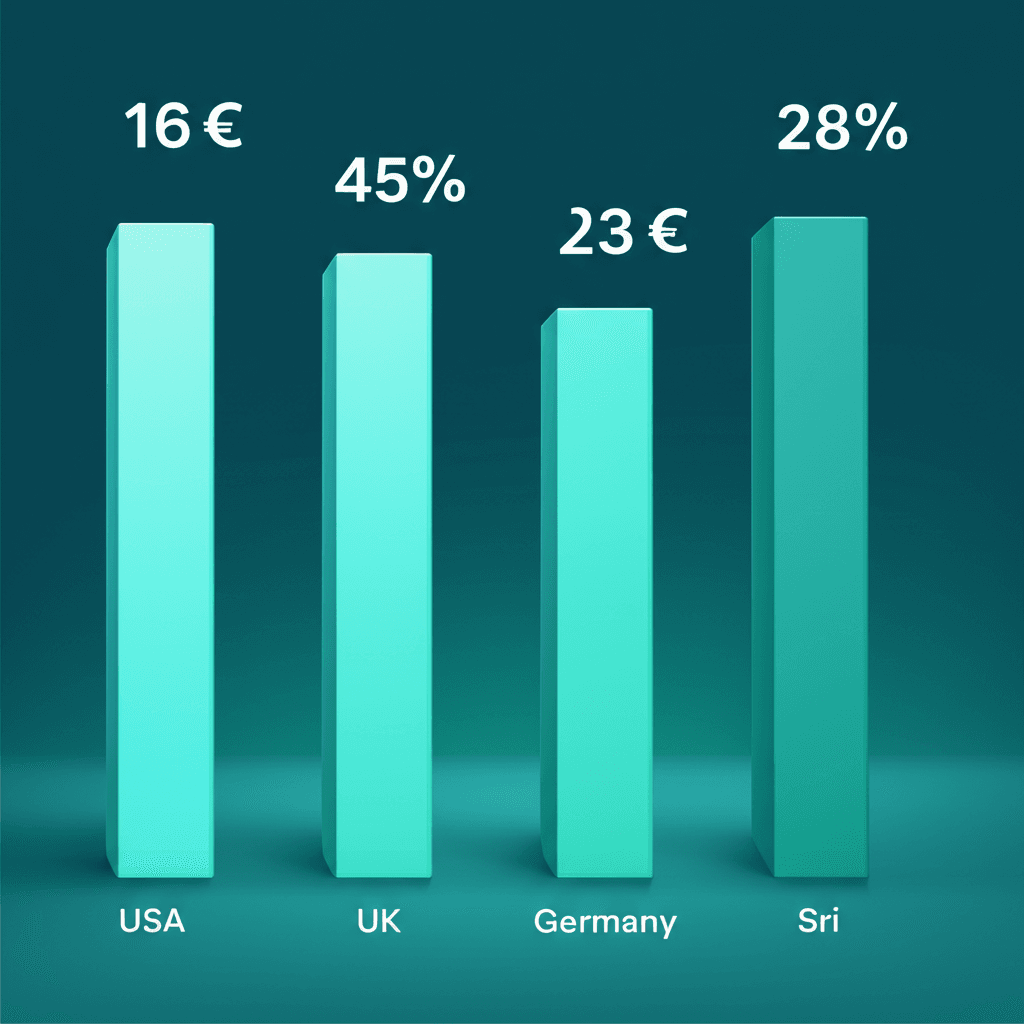
I’ve managed projects with teams all over the world, and the rate differences are significant. You can’t ignore them. Let’s look at some typical hourly rates for a skilled, mid-level web developer:
United States: $90 – $150+ per hour
United Kingdom: £60 – £100+ per hour (approx. $75 – $125)
Sri Lanka: $25 – $50 per hour
Right away, you can see you’re paying a third, or even a quarter, of the price. This isn’t because the talent is any less capable. It’s a direct result of the local cost of living. An agency in Colombo doesn’t have to pay San Francisco-level rent for their office or London-level salaries for their staff to live comfortably. Those operational savings are passed directly to you, the client.
It’s About Value, Not Just Price
The real magic happens when you look beyond the hourly rate and consider the overall project value. Favorable exchange rates (USD, EUR, GBP to the Sri Lankan Rupee) give your budget incredible purchasing power. What does that actually mean for your project?
I remember a client with a $40,000 budget for a custom e-commerce platform. In the US, that budget would have covered a solid build but left very little for extensive quality assurance (QA) or post-launch support. By working with a Sri Lankan team, they got the entire platform built on a modern stack like React and Node.js, plus a dedicated QA engineer for the final month of the project and a six-month retainer for maintenance. Same budget, but the scope of work and the final deliverable were worlds apart. That’s a massive increase in your return on investment.
You’re not just getting a cheaper website. You’re getting a better website for your money—more features, more testing, and more support. You’re essentially reallocating funds that would have gone to a Western agency’s overhead and putting them directly into improving your digital product.
Ensuring Quality & Seamless Communication Across Continents
Here’s what really matters though. The cost savings are great, but how do you actually manage a web design project with a team halfway around the world without losing your mind? I think a lot of the hesitation comes from a fear of the unknown—the “what ifs” around communication breakdowns, missed deadlines, and quality control. It’s a totally valid concern.
But any serious Sri Lankan agency today isn’t just a loose collection of freelancers using WhatsApp. They operate on established, transparent project management methodologies. Most run on frameworks like Agile or Scrum, which is just a structured way of saying they work in short, predictable cycles, often called “sprints.” This means you’re not waiting months for some grand, nerve-wracking reveal. Instead, you’re seeing tangible progress every week or two, giving feedback, and ensuring the project stays perfectly aligned with your vision. There are no big, scary surprises.
The Daily Communication Rhythm
The toolkit for making this happen is probably familiar. It’s a suite of tools designed to make distance irrelevant. Think of it like a virtual office:
Slack for all the day-to-day chatter, quick questions, and file sharing.
Jira or Asana for a crystal-clear view of the project’s progress. You can see every task, who it’s assigned to, and its status at any time.
Zoom or Google Meet for the weekly check-ins and strategy sessions where face-to-face conversation is just better.
This setup creates a constant, open line of communication. You’re never left wondering what’s going on.
Making Time Zones Your Secret Weapon
Okay, the time difference is a big one. A team in Colombo is about 9-10 hours ahead of London and 4-5 hours ahead of Central Europe. But instead of a hurdle, I’ve seen this become a massive advantage. For example, a client in New York can send a list of feedback and revisions at the end of their workday. While they’re sleeping, the Sri Lankan team has their entire workday to implement those changes. The client wakes up, and often, the work is already done and waiting for their review. It creates an almost 24-hour development cycle that can seriously speed up a project’s timeline.
Proof Is in the Past Performance
Ultimately, trust has to be earned with proof. Before you commit, you have to do your homework. Look past the slick sales pitch and dig into their actual work. Ask to see a portfolio of live sites they’ve built. A great agency will also have detailed case studies that show their thinking—they’ll walk you through a past project’s challenge, their unique solution, and the results. And please, read their client testimonials on independent sites like Clutch.co, not just the curated ones on their homepage. That’s where you’ll find the real story.
Your Roadmap: How to Hire a Sri Lankan Web Design Partner
Okay, so you’re ready to find a partner. But where do you even begin? It feels like a huge task, but I think you can break it down into a few manageable steps. Think of it less like a blind search and more like a focused talent scout mission.
Where to Look
Your search will likely start in one of three places. For established teams, I’d look at B2B directories like Clutch.co, where you can find vetted agencies with verified client reviews. It’s a great starting point for finding reliable, full-service partners. If you’re looking for an individual for a more specific task, freelance platforms like Upwork are full of talented Sri Lankan designers and developers. And honestly, a simple, targeted Google search for “web design agency Sri Lanka” can uncover some hidden gems that might not be on the big platforms yet.
The Vetting Process: More Than Just Pretty Pictures
When you review a portfolio, don’t just get wowed by the visuals. Click through to the live sites. Do they load quickly? Is the navigation intuitive? A beautiful design that’s a pain to use isn’t a success. During your first call, ask them to walk you through their typical project process. You want to hear words like discovery, wireframing, and user testing. I also always ask, “Who will be my day-to-day contact?” Knowing you have a dedicated project manager is a huge plus.
Understanding the Paperwork
Once you find a potential partner, they’ll send a proposal. Make sure it clearly defines the scope of work, deliverables, and a project timeline with milestones. Pay attention to the payment structure. For smaller projects, a 50% upfront and 50% on completion model is common. For larger builds, I prefer milestone-based payments—for instance, 30% to start, 40% after design approval, and the final 30% upon launch. This keeps everyone motivated and accountable.
Starting Strong: The Onboarding
The first week sets the tone for the entire project. This is the time to establish clear communication expectations. Agree on which tools you’ll use (like Slack or email) and a realistic schedule for check-ins, considering the time zone difference. For example, on a recent project with a team in Colombo, we established two weekly 15-minute syncs that worked for both time zones. It created a simple rhythm for feedback and progress updates, ensuring there were no surprises along the way. Get this right, and you’re well on your way to a smooth partnership.
So, What’s the Real Takeaway?
Honestly, I think the most important thing to remember is that you no longer have to choose between an amazing website and a sensible budget. It’s so easy to get stuck thinking our best options are local, but that’s just not the case anymore. Finding a talented web design team in Sri Lanka isn’t about cutting corners; it’s about making a smart business decision that gets you exceptional quality without that huge price tag. It’s about getting more for your money, plain and simple.
Imagine what you could do with the budget you save—reinvesting it into marketing or other parts of your business. Partnering with a skilled Sri Lankan team really does open up a whole new set of possibilities for your growth.
Frequently Asked Questions
Is Sri Lanka a good country for IT outsourcing and web design?
Yes, Sri Lanka is an excellent choice. It boasts a highly skilled, English-speaking IT workforce, a growing tech infrastructure, significant cost advantages compared to Western countries, and a supportive government ecosystem for the tech industry.
What is the average cost to build a website in Sri Lanka?
Costs vary based on complexity, but you can expect to pay significantly less than in North America or Europe. A standard business website can range from $1,500 to $7,000, whereas a similar project could cost over $15,000 in the US.
How do I handle payments and contracts with a Sri Lankan agency?
Most Sri Lankan agencies are experienced with international clients. Contracts are legally binding and follow international standards. Payments are typically made via secure wire transfers or online payment platforms like Wise or Payoneer, often structured around project milestones.