Have you ever landed on a website and felt an immediate sense of trust and clarity, even before reading a single word? That’s not an accident; it’s the result of deliberate design choices that anticipate your needs. Conversely, a site that feels five years old can erode that trust in seconds. With user expectations evolving faster than ever, the design principles that worked on your last project might already be obsolete, directly impacting your engagement and conversion metrics.
This isn’t another abstract list of trends. We’re bypassing the fluff to focus on what is genuinely shaping effective web design for 2026. You’ll see exactly how generative AI is moving beyond simple chatbots to create truly dynamic user journeys and how new CSS features are enabling fluid, responsive layouts that were once impossible without complex code. We’ll explore practical methods for integrating spatial design elements without alienating users on traditional devices.
You will walk away with a clear roadmap for making specific, high-impact updates, not just a collection of fleeting fads. Get ready to see how these changes can be applied directly to your own projects to build sites that are not only beautiful but also remarkably effective.
Trend 1: AI-Powered Generative UI/UX
For years, we’ve used AI to personalize content—showing you products you might like. By 2026, the focus will shift from personalizing the content within the frame to personalizing the frame itself. Generative UI means the website’s structure, layout, and even interactive elements are created and adapted on the fly for each individual user session. It’s a fundamental change from one-size-fits-all design.
Real-Time Layout Personalization
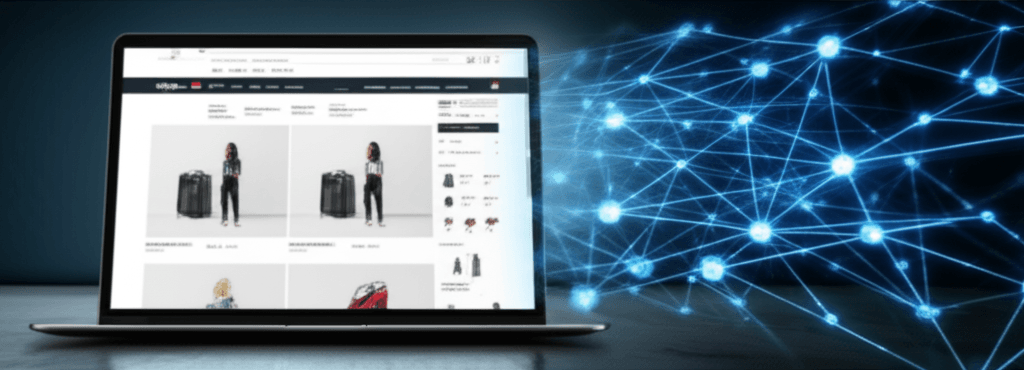
Imagine a returning visitor to an e-commerce site. Instead of just seeing recommended products, the AI analyzes their past behavior. If they are a price-conscious shopper who always uses the “sort by low-to-high” filter, the system might dynamically re-render the navigation to place the “Clearance” link first. For a user who prioritizes newness, the AI could generate a completely different homepage layout, leading with a full-width “New Arrivals” component instead of the standard hero banner. This isn’t just reordering content; it’s rebuilding the interface based on demonstrated intent.
Predictive Flows and Continuous Optimization
This trend goes beyond simple layout changes. AI will begin to predict a user’s next step and adjust the interface to shorten their path to conversion. For example, if data shows that 70% of users who view a specific camera also view a specific lens, the AI can run a micro-A/B test automatically. For one user segment, it might inject a “Frequently Bought Together” module directly onto the camera page. For another, it might trigger a non-intrusive pop-up with the lens after a 15-second dwell time. The AI continuously runs thousands of these small tests, learning and adapting the user flow in real-time to find the most effective path for different user archetypes. Your website effectively optimizes itself, every single minute.
Trend 2: Immersive 3D and the Spatial Web
We’ve seen 3D elements on websites for years, often as flashy but slow-loading novelties. Here’s what really matters though: the technology is now mature, performant, and accessible. Thanks to advancements in WebGL and libraries like Three.js, integrating interactive 3D is no longer a massive technical hurdle. It’s a practical tool for engagement that can directly impact business goals.
From Product Photos to Interactive Models
The most direct application is for e-commerce. Instead of a flat image gallery, you can let customers spin, zoom, and customize a product in real-time. A furniture store could show a sofa in different fabrics, or an automotive brand could let you open the car doors and look inside. For example, after implementing a WebGL-based 3D configurator for its flagship sneakers, a footwear company saw a 20% increase in add-to-cart actions. The key is performance. Your 3D models must be aggressively optimized—think low-polygon counts and compressed textures in .glb format—to ensure they load almost instantly on both desktop and mobile.
Virtual Tours and Digital Showrooms
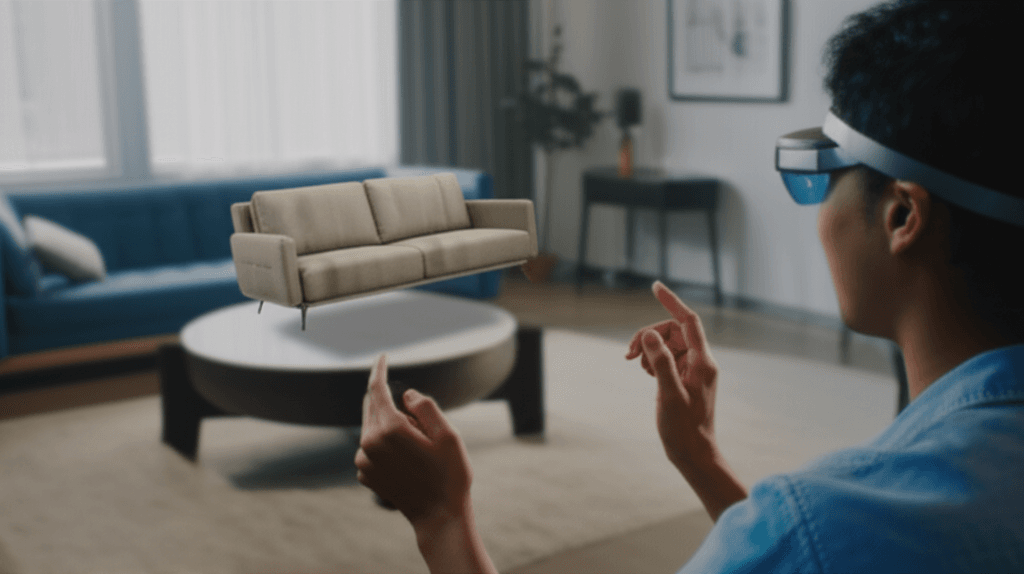
This extends beyond single products to entire environments. Real estate agencies are creating virtual property tours that work on any device, no app required. Retailers are building digital showrooms that mimic the discovery process of in-person shopping. These aren’t just 360-degree videos; they are explorable spaces that give users a genuine sense of presence and scale. To get started, you can use platforms that convert panoramic photos into interactive tours or work with 3D artists to build a custom space from scratch. The goal is to move beyond a flat grid of products and create a more memorable, branded experience.
The final piece is the connection to AR/VR hardware, forming the true “spatial web.” The same 3D assets built for your website can be the foundation for a fully immersive experience. A button on your site could let a user with a headset “step inside” the digital showroom they were just browsing. It’s about creating a consistent asset pipeline that scales from a 2D screen to a three-dimensional world.
Trend 3: Hyper-Personalization and Data Storytelling
Here’s the part most people miss. For years, “personalization” meant showing a user products similar to what they’ve already bought. By 2026, this evolves from a simple recommendation engine into full-blown data storytelling, where the website crafts a unique narrative journey for each visitor. It’s about making the user the protagonist of their experience on your site.
From Recommendation to Narrative
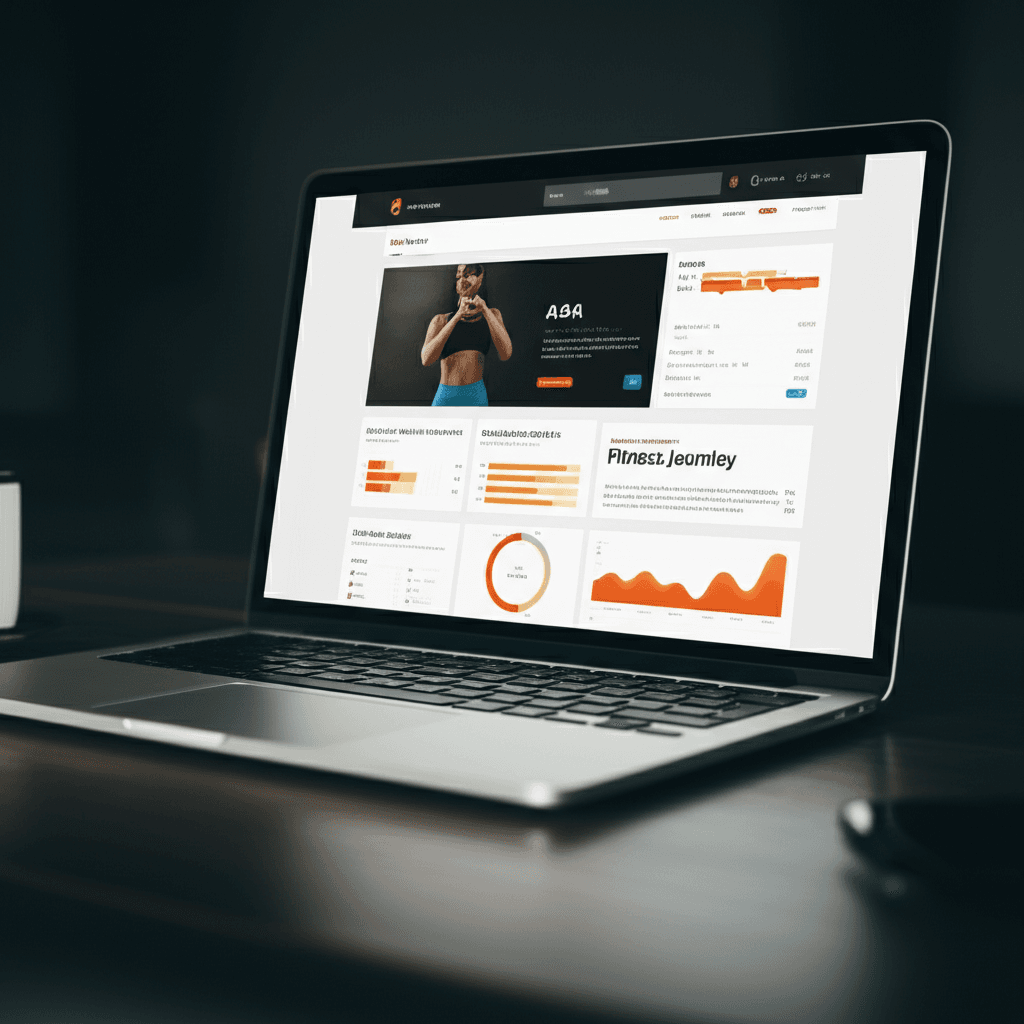
Instead of static content, you’ll design experiences where the very fabric of the site—headlines, imagery, and even data visualizations—adapts to the user. Imagine a fitness app’s website. A new visitor sees general motivational content. But a logged-in user who just completed a 5k run sees a homepage hero that says, “Great 5k, Alex! Ready for the next step?” Below, an interactive infographic visualizes their progress over the last month, dynamically plotting their pace against their goal. This isn’t just showing data; it’s telling a story of their achievement and framing the brand as their personal coach.
Putting It Into Practice
This requires a shift from page-based design to a modular, component-driven approach. You aren’t building one homepage; you’re building a system of content blocks that a Customer Data Platform (CDP) can assemble in real-time. To get started:
Map key data triggers: Identify the user data points that should alter the narrative. This could be anything from location and past purchases to time spent on a specific feature.
Define narrative paths: For each key user segment (e.g., “New Prospect,” “Loyal Customer,” “At-Risk User”), outline the story you want them to experience.
Design adaptive components: Create headlines, images, and charts as flexible modules that can pull from a data source to change their content and appearance.
The goal is to make every interaction feel less like browsing a generic website and more like a personal consultation. Your site stops being a brochure and becomes a dynamic conversation partner.
For years, we’ve treated micro-interactions as simple, decorative animations. Here’s what really matters though: by 2026, these details are evolving into a multi-sensory feedback system that makes digital interfaces feel physical. We’re moving beyond flat design and into designing for feel. The goal is no longer just to show a user that an action was successful, but to make that success feel satisfying and tangible.
Physics-Based Motion
Generic CSS ease-in-out transitions are no longer sufficient. Users now expect interfaces to behave like objects in the real world. This means implementing physics-based animations that incorporate properties like mass, tension, and friction. When a user dismisses a modal, does it just fade away, or does it “spring” back with a slight wobble before disappearing? Frameworks like Framer Motion make this accessible, allowing you to build UIs where draggable elements have weight and buttons feel like they are actually being pressed into a surface.
Auditory and Tactile Cues
The next layer is incorporating sound and touch. Imagine a user toggling a switch on their phone. Instead of just a visual change, a subtle, low-frequency “click” sound provides auditory confirmation. On compatible devices, you can pair this with a crisp haptic buzz using the Web’s `Navigator.vibrate()` API. For example, a call like `navigator.vibrate(50)` produces a short 50ms vibration. This combination is powerful for confirming critical actions, like completing a purchase or deleting a file. The key is subtlety; these cues should provide feedback without ever becoming intrusive, and users should always have the option to disable them.
Trend 5: Sustainable Web Design & Eco-Minimalism
The internet isn’t weightless; every byte transferred consumes energy. By 2026, designing for efficiency is no longer just about speed—it’s about responsibility. Sustainable web design, or eco-minimalism, treats performance as a core principle for reducing environmental impact. It’s a happy coincidence that what’s good for the planet is also fantastic for user experience and SEO.
Performance as a Green Metric
The single biggest thing you can do is reduce page weight. Forget bloated frameworks. We’re seeing a return to basics, with teams setting strict performance budgets—aiming for total page sizes under 500KB. This means ruthless optimization. Switch your JPEGs and PNGs to modern formats like AVIF or WebP, which can cut image file sizes by 30-50% with little to no visible quality loss. Instead of loading five different font weights, use a single variable font file. Or better yet, lean on system fonts. They require zero download time and are incredibly efficient.
Energy-Conscious Interfaces
Thoughtful UI choices can directly impact a user’s device battery. Dark mode is the prime example. On OLED screens—now standard on most high-end phones—a true black pixel (#000000) is literally turned off, consuming no power. This isn’t just an aesthetic trend; it’s a functional feature that saves energy. We’re also seeing a reduction in motion and complex animations that tax the device’s CPU and GPU, favoring simple, meaningful transitions instead.
Communicating Your Commitment
Showing your work is becoming part of the design itself. Rather than a generic “we care” statement, brands are integrating their sustainability efforts directly into the user experience. For instance, the website for the band Massive Attack was redesigned to be an ultra-low-carbon experience. Some sites now include a small footer widget that displays the page’s CO2 emissions per view, calculated by tools like the Website Carbon Calculator. This transparency builds trust and turns a technical goal into a powerful brand value.
Your Next Move: From Trend to Traction
The most successful brands in 2026 will not be those who use the most trends, but those who apply them with purpose. The core principle is clear: align design innovation directly with user needs and business goals. Instead of just adding an AI chatbot because it’s new, use it to solve a specific problem, like how one e-commerce client cut support response times by 60%. The goal is measurable improvement, not just aesthetic updates.
Your immediate next step is a simple audit: review your site’s main user journey and identify one point of friction. Then, select the single 2026 trend that most directly resolves that issue. Ready to future-proof your website? Contact our expert design team today for a consultation on implementing these 2026 trends.
Frequently Asked Questions
What will be the biggest web design trend in 2026?
AI-driven generative UI, which personalizes website layouts and experiences for each user in real-time, is predicted to be the most impactful trend. It represents a shift from static designs to dynamic, ever-changing interfaces.
Is minimalism still a trend in web design?
Yes, but it's evolving into 'Eco-Minimalism.' This trend focuses not just on clean aesthetics but also on performance and sustainability, creating fast-loading, energy-efficient websites that are better for both the user and the planet.
How will AR/VR affect website design in 2026?
AR/VR will push websites towards becoming immersive 3D experiences, creating a 'spatial web.' This means more interactive product visualizations, virtual tours, and web content that can blend with the user's physical environment.