


16 Key Benefits of E-Commerce for Sri Lankan Businesses in 2026
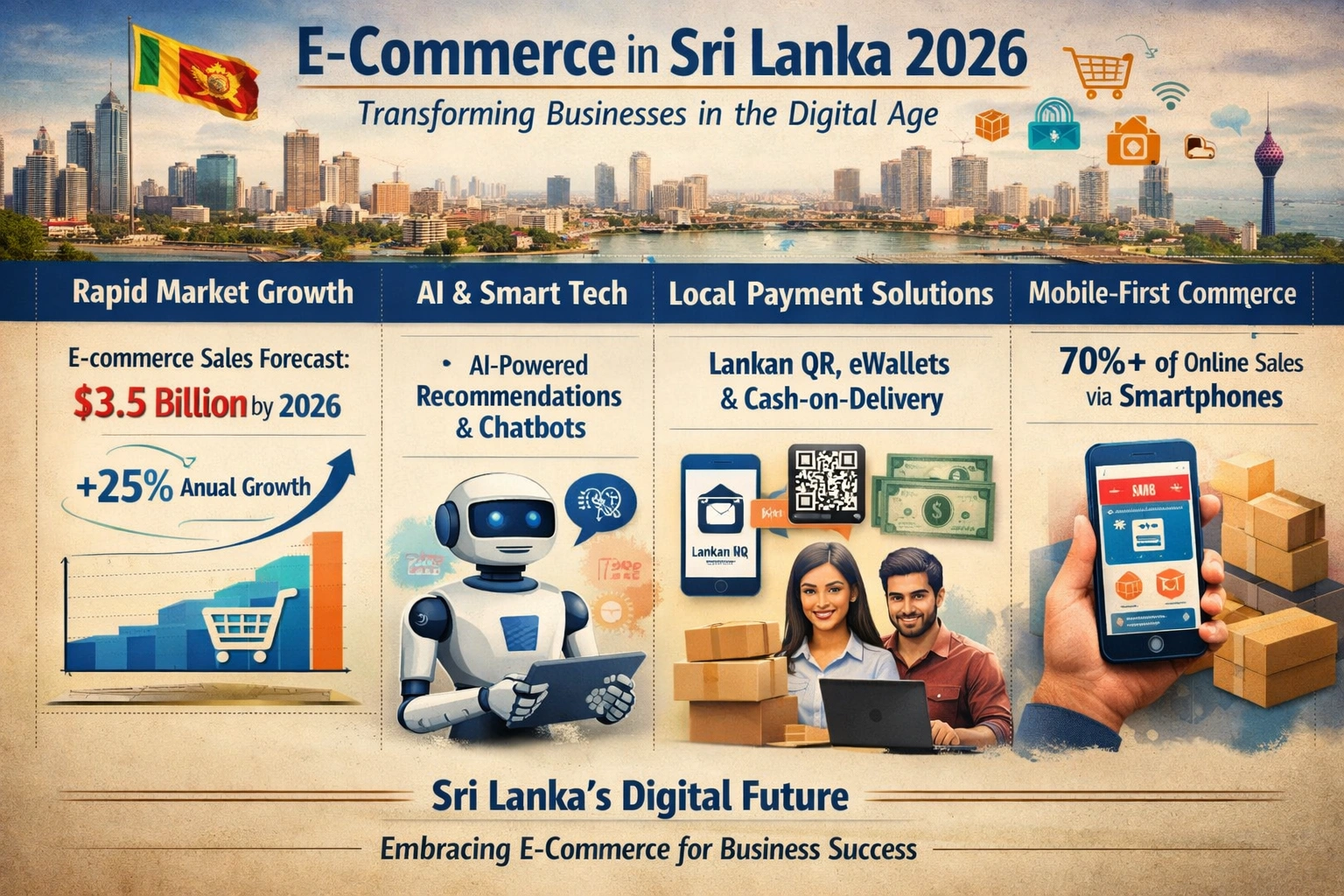
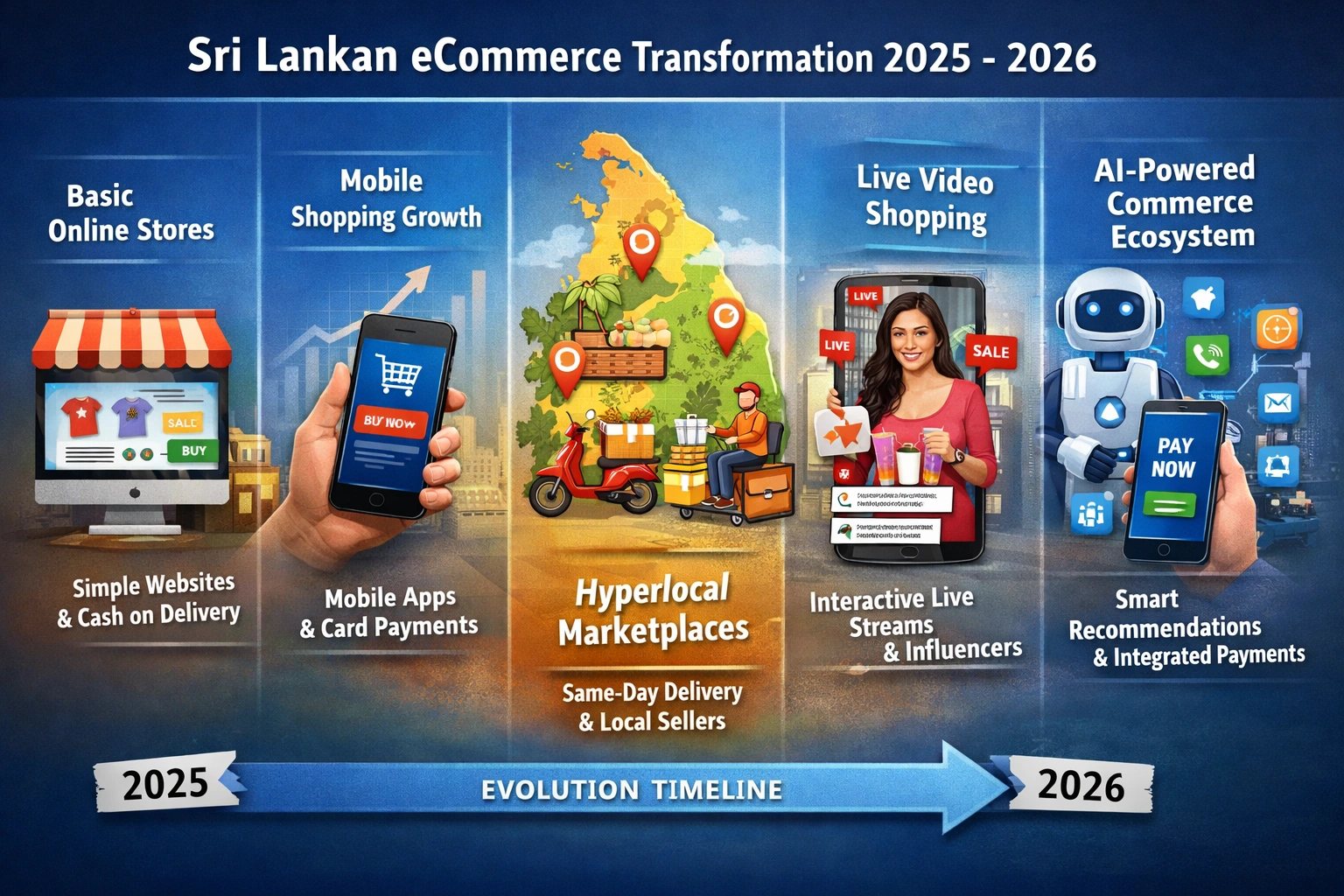
Sri Lanka’s e-commerce landscape has transformed dramatically between 2025 and 2026. With the market projected to exceed USD 3.2 billion by 2026 and growing at 10.8% annually, e-commerce has transitioned from a competitive advantage to a business imperative. The democratization of AI, hyperlocal delivery networks, embedded payment integrations and voice commerce have fundamentally changed what’s possible for businesses of all sizes. For Sri Lankan entrepreneurs, the question is no longer “should we go online?” but “how do we leverage these tools to scale faster than competitors?”
At Mobiz International, a leading web design and eCommerce development agency in Sri Lanka, we’ve witnessed this evolution firsthand. This updated guide explores 16 strategic benefits reshaping e-commerce in 2026—benefits that translate directly into measurable revenue growth and market advantage.
1. Expanded Market Reach Beyond Geographical Limitations
E-commerce eliminates the physical boundary constraints that plague brick-and-mortar stores. In 2026, with 13.9 million internet users in Sri Lanka (59.7% penetration) and growing regional connectivity, a business in Galle reaches customers in Singapore, Dubai and London with equal ease.
What’s new in 2026: Hyperlocal delivery networks have matured. Businesses can now offer same-day delivery in Colombo while simultaneously serving international wholesale buyers—a dual revenue stream impossible offline. Cross-border e-commerce revenue for Sri Lankan businesses is growing 25%+ annually, particularly for tea, spices, gemstones and handloom exports.
Implementation Strategy for 2026:
- Establish regional warehousing (Colombo, Kandy, Galle) for faster hyperlocal delivery
- Implement multi-currency pricing (USD, GBP, INR, AED) with dynamic exchange rates
- Create separate product catalogs targeting domestic vs. international buyers
- Leverage AI to predict demand per geography, optimizing inventory
2. 24/7 Autonomous Sales with AI Handling Peak Hours
Beyond passive availability, 2026 e-commerce sites actively generate sales around the clock through AI. Chatbots in Sinhala/Tamil handle 80% of customer queries automatically. Product recommendations appear in real-time, adapted per visitor. Checkout processes anticipate and resolve friction before customers experience it.
While a physical store sleeps, your online store works—staffed by intelligent systems. For Sri Lankan SMEs with limited 24/7 support budgets, this is transformative.
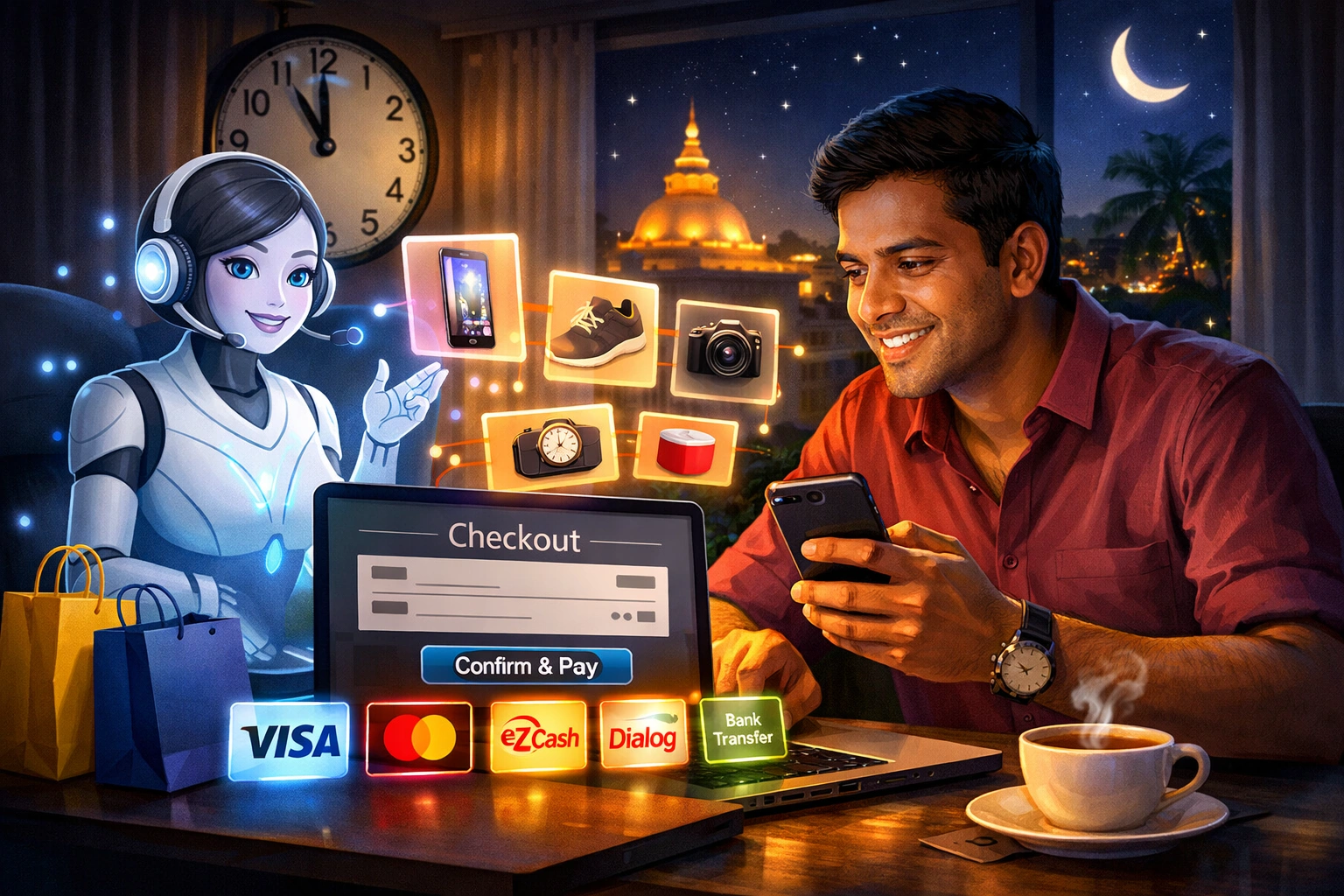
Implementation Strategy for 2026:
- Deploy multilingual chatbots (Sinhala, Tamil, English) using GPT-based APIs
- Enable “night mode” checkout with reduced form fields for mobile speed
- Set up abandoned cart recovery via SMS/WhatsApp at personalized time windows
- Implement predictive inventory alerts triggering automated restocking
3. Reduced Operational Costs with Digital-First Infrastructure
In 2026, commercial real estate in Colombo continues climbing. Meanwhile, cloud-based e-commerce infrastructure costs have plummeted. A business operating both physical and online storefronts discovers that digital generates 3x revenue at 30% the overhead of physical retail.
No rent. No utility bills. No full-time cashiers. Inventory stored in partner warehouses. Automation handling 90% of order processing. The math is stark: e-commerce unit economics dwarf traditional retail.
Implementation Strategy for 2026:
- Migrate to cloud infrastructure (AWS/Azure) eliminating server maintenance
- Partner with 3PL providers (third-party logistics) for warehouse and fulfillment
- Implement automated inventory management with demand forecasting
- Use dropshipping for low-velocity SKUs, reducing capital tied up in stock
4. AI-Powered Customer Insights Driving Real-Time Decisions
Data analytics in 2026 goes beyond reporting—it’s prescriptive. AI identifies patterns humans miss: “Customers purchasing this product on Tuesday evenings have 40% higher lifetime value” or “Offering 10% discount at checkout conversion point increases order frequency 23%.” Real-time dashboards surface actionable insights hourly, not monthly.
Sri Lankan businesses leveraging analytics are outcompeting international sellers lacking this sophistication.

Implementation Strategy for 2026:
- Implement Google Analytics 4 with custom event tracking for micro-conversions
- Deploy heatmap tools (Hotjar, Contentsquare) to visualize user behavior
- Use predictive analytics (Prophet, custom ML models) for demand forecasting
- Set up automated alerts for anomalies (traffic spikes, conversion drops)
- Build dashboards for daily review by leadership teams
5. Hyper-Personalization Increasing Conversion 20-50%
Generic product pages are extinct in 2026. Every visitor sees a customized experience: different homepage images, pricing tiers, product recommendations and CTAs based on device, location, browsing history and lookalike buyer profiles. A first-time mobile visitor from Negombo sees different content than a repeat desktop user from Colombo.
For Sri Lankan eCommerce sites implementing personalization, conversion rates increase 20-50% without additional traffic spending.
Implementation Strategy for 2026:
- Implement CDN-cached personalization (Kameleoon, Dynamic Yield) for speed
- Create audience segments: first-time mobile, repeat buyers, high-value, at-risk churn
- A/B test personalization tactics: Do Colombo customers prefer WhatsApp or phone support?
- Use AI recommendation engines showing “Customers who bought this also browsed…”
- Implement dynamic pricing adjusting for inventory levels and demand
6. Streamlined Checkout Reducing Abandonment from 70% to 35%
Here’s a brutal statistic: 70% of Sri Lankan cart abandonment occurs at checkout due to unfamiliar payment options or complex forms. In 2026, leading eCommerce sites solve this with one-click checkout, local payment integration (LankaQR, PayHere, FriMi), guest checkout options and instant payment confirmation via SMS.
Sites reducing checkout steps from 8 to 3 see abandonment plummet to 35%, recovering millions in lost revenue.

Implementation Strategy for 2026:
- Implement progressive checkout revealing only essential fields initially
- Integrate LankaQR, PayHere, FriMi, bank transfers with one-tap payment
- Offer cash-on-delivery prominently for hesitant buyers
- Enable Buy Now Pay Later (BNPL) for orders over Rs. 10,000
- Provide real-time SMS/WhatsApp order confirmation with tracking link
7. Social Commerce Integration Enabling In-App Checkout
In 2026, 40% of Sri Lankan eCommerce transactions initiate on social platforms (Instagram, TikTok, WhatsApp) but 60% still require friction-heavy redirects to external websites. The winners eliminate this friction by enabling checkout directly within social platforms or messaging apps.
WhatsApp Business Catalogues, Instagram Shops and TikTok Shop integrations with embedded LankaQR payments are now baseline. A customer discovering your product on Instagram completes purchase without leaving the app—conversion rates are 3-5x higher than traditional traffic.
Implementation Strategy for 2026:
- Set up Instagram Shops with inventory synced in real-time
- Create WhatsApp Business Catalog showcasing products with pricing
- Enable click-to-WhatsApp ads directing to pre-filled product queries
- Implement TikTok Shop if targeting under-25 demographic
- Use social pixel tracking to measure conversions across platforms
8. AI-Driven Marketing Automation Reducing Customer Acquisition Costs
Traditional marketing—spray-and-pray Facebook ads reaching broad audiences—is dead. In 2026, AI identifies likely buyers with surgical precision: “Users aged 28-42 in Colombo who viewed spice products twice and abandoned cart.” Budget reaches only those prospects.
Predictive audiences reduce customer acquisition cost (CAC) 40-60% while improving conversion quality. Machine learning continuously optimizes ad creative, targeting, timing and messaging.
Implementation Strategy for 2026:
- Deploy Facebook Advantage+ campaigns letting AI optimize budgets automatically
- Use Google Performance Max for search + shopping + YouTube across formats
- Implement lookalike audiences based on high-value customer profiles
- A/B test creative variations (50+ combinations) automatically
- Set up conversion tracking by traffic source, device and demographic
9. Voice Commerce and AI-Powered Search Capturing Emerging Demand
“Kottu roti delivery Colombo now” or “Buy Ceylon tea online Rs. 500” are real search queries in 2026. Traditional keyword targeting misses these conversational queries. Voice-optimized sites with natural language understanding capture this emerging segment.
Businesses implementing voice search optimization rank for 3-5x more queries than competitors using old-style keyword matching.
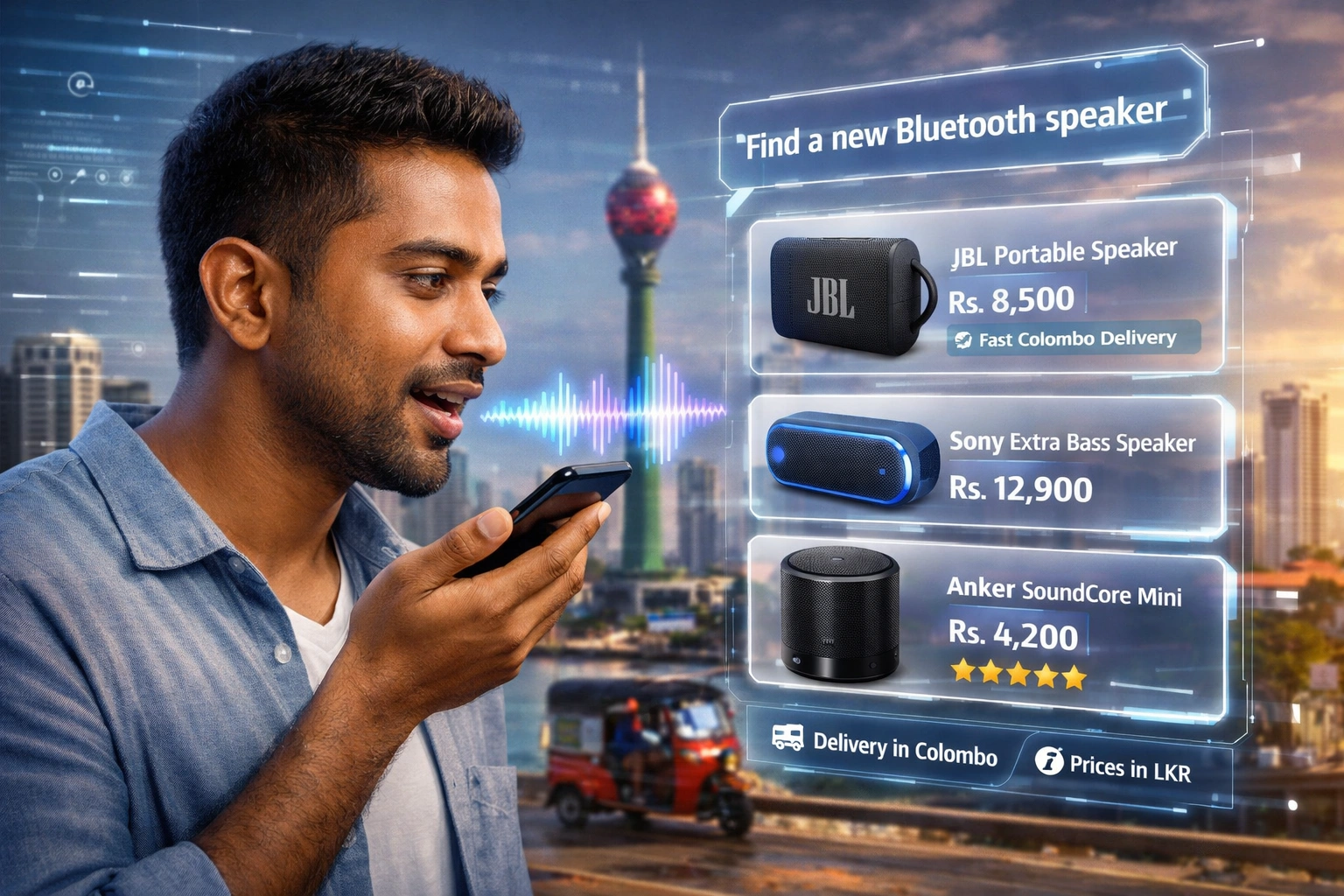
Implementation Strategy for 2026:
- Optimize for conversational queries: “Can I return within 30 days?” vs. “return policy”
- Implement FAQ schema markup enabling voice assistant responses
- Add voice search button to mobile checkout
- Create content answering long-tail questions specific to Sri Lanka
10. Mobile-First, Progressive Web Apps (PWA) Replacing Native Apps
82% of Sri Lankan eCommerce happens on mobile, yet many businesses still prioritize desktop designs. In 2026, forward-thinking retailers build Progressive Web Apps—fast, app-like mobile experiences without app store friction. Users can install PWAs on home screens, receive push notifications, shop offline and access carts across devices seamlessly.
PWAs load 40% faster than native apps, drive 60% higher engagement and cost 70% less to maintain than iOS+Android native apps.
Implementation Strategy for 2026:
- Build mobile-first, responsive designs with 90+ Lighthouse performance scores
- Implement PWA features: offline cart, push notifications, home screen install
- Optimize for 4G networks—test extensively on slower connections
- Reduce bundle sizes: CSS/JS minification, image optimization (WebP/AVIF)
- Enable one-tap checkout from home screen
11. Live Video Shopping and Real-Time Engagement
Instagram Live, TikTok Live and YouTube Shopping integrations drive impulse sales in 2026. Founders go live daily, demonstrating products, answering questions in real-time and offering live-exclusive discounts. Conversion rates during live sessions are 5-10x higher than static product pages.
Sri Lankan fashion, beauty and food brands leveraging live commerce grow revenue 25-40% monthly.
Implementation Strategy for 2026:
- Schedule 2-3 weekly live sessions on Instagram/TikTok during peak traffic hours
- Use polls, Q&A and limited-time offers (countdown timers) to drive urgency
- Provide shoppable links in bio and video descriptions
- Highlight 3-5 products per session with exclusive live-only discounts
- Repurpose live videos into Instagram/TikTok short clips for organic reach
12. Multilingual, Multicultural Personalization
One-size-fits-all websites fail in Sri Lanka. Visitors using Sinhala interface expect Tamil-friendly support. Urban professionals want English-language product reviews. Regional customers outside Colombo prefer WhatsApp communication. In 2026, winning sites dynamically adapt language, currency, payment methods and even product recommendations per visitor.
Sites offering Sinhala + Tamil + English with region-specific features (Colombo same-day delivery vs. island-wide shipping) see 30-40% conversion lifts.
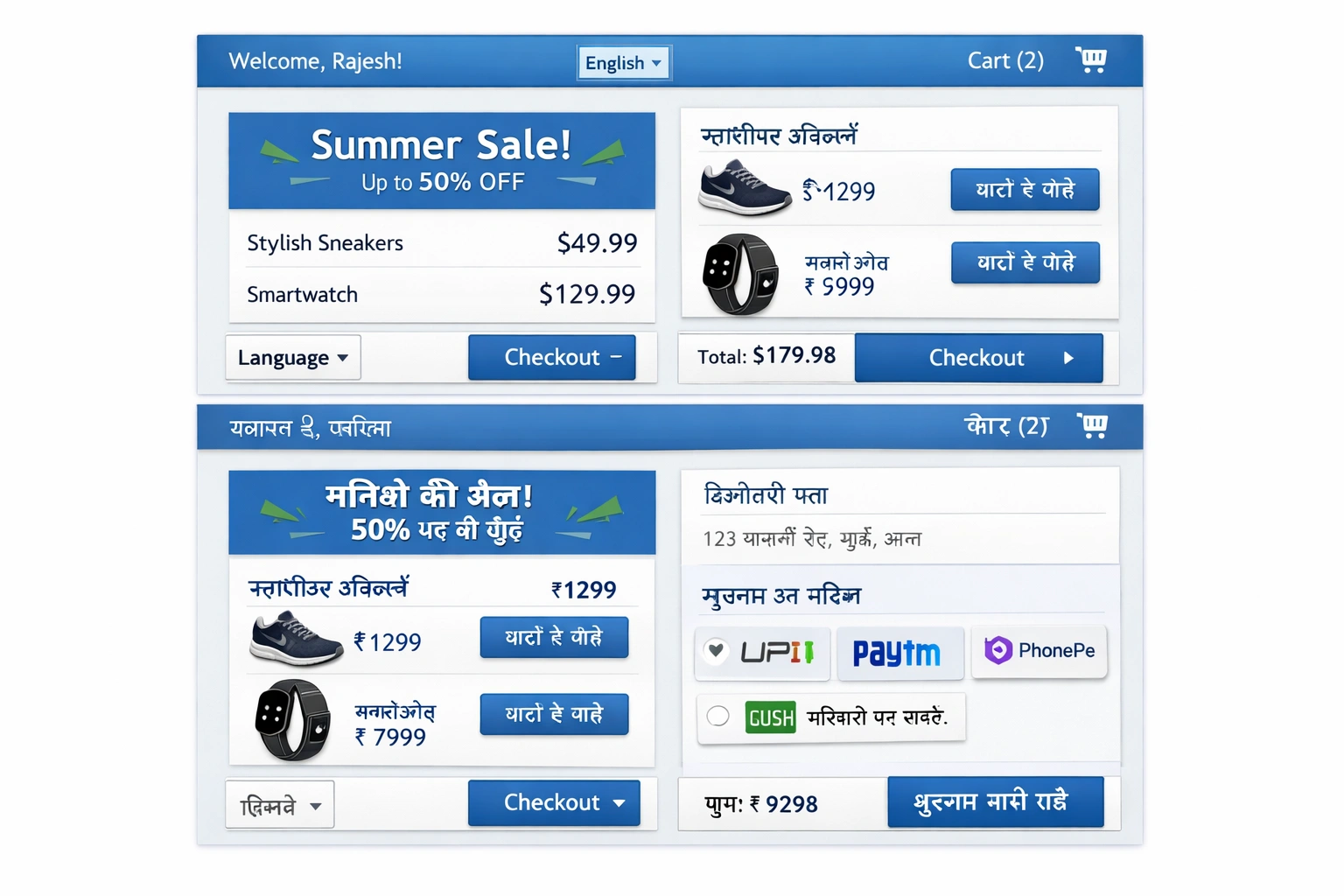
Implementation Strategy for 2026:
- Implement language toggle with persistent user preference storage
- Translate product descriptions, support copy and CTAs comprehensively
- Offer region-specific delivery options and cost calculations
- Support local payment gateways per language audience
- Hire cultural consultants ensuring appropriateness (avoid generic translations)
13. Predictive Inventory and Demand Forecasting Eliminating Stockouts
Stockouts lose revenue. Overstock ties up cash. In 2026, AI predicts demand 4-8 weeks forward with 85%+ accuracy, automatically triggering restocking. Seasonal patterns, local festivals (Sinhala New Year, Eid), promotional calendars and competitor activity inform predictions. Inventory optimization reduces holding costs 20% while preventing stockouts.
This directly impacts bottom-line profitability, particularly for SMEs with tight cash flow.
Implementation Strategy for 2026:
- Implement demand forecasting tools (Prophet, Azure Forecasting, custom LSTM models)
- Automate reorder point calculations based on lead time and safety stock
- Track competitor pricing and inventory for competitive pricing
- Use historical data + event calendars for seasonal adjustments
- Set up alerts when actual demand deviates from predictions
14. Omnichannel Loyalty Programs Merging Online and Offline
A customer buys from your physical store, then discovers your online store offers the same product cheaper—and disconnected loyalty points. In 2026, sophisticated businesses merge physical and digital loyalty, tracking across touchpoints. Buy online, pickup in-store. Earn points both places. Redeem anywhere.
Omnichannel loyalty increases customer lifetime value (CLV) 3-5x, creating stickiness beyond individual transactions.
Implementation Strategy for 2026:
- Implement unified CRM (Salesforce, HubSpot, Shopify Plus) tracking all interactions
- Create tier-based loyalty (Bronze/Silver/Gold) with escalating benefits
- Enable BOPIS (Buy Online Pickup In-Store) for faster fulfillment
- Issue digital loyalty cards accessible via mobile wallets
- Offer exclusive perks per channel (early access online, double points in-store)
15. Regulatory Compliance and Trust Building as Competitive Advantage
Sri Lanka’s regulatory landscape is evolving. Data protection frameworks, digital taxation and consumer protection standards are tightening. In 2026, businesses transparently displaying compliance signals (SSL certificates, privacy policies, tax IDs, verified business registration) are winning trust. Competitors cutting corners face chargebacks and reputational damage.
Trust is currency in e-commerce—visible compliance builds it.
Implementation Strategy for 2026:
- Obtain ICTA SSL certification and display padlock prominently
- Draft comprehensive privacy policy addressing PDPA draft provisions
- Display business registration, tax ID and physical address clearly
- Implement fraud detection systems and chargeback management
- Obtain industry-specific certifications (e.g., food safety for grocery sellers)
16. Sustainable, Eco-Conscious Operations Resonating with Conscious Consumers
By 2026, conscious consumers—particularly urban millennials and Gen Z—actively choose eco-friendly e-commerce businesses. Digital operations (no physical store = lower energy), sustainable packaging and carbon-offset shipping are now marketing talking points, not afterthoughts. Businesses highlighting environmental commitment see 15-25% premium pricing acceptance.
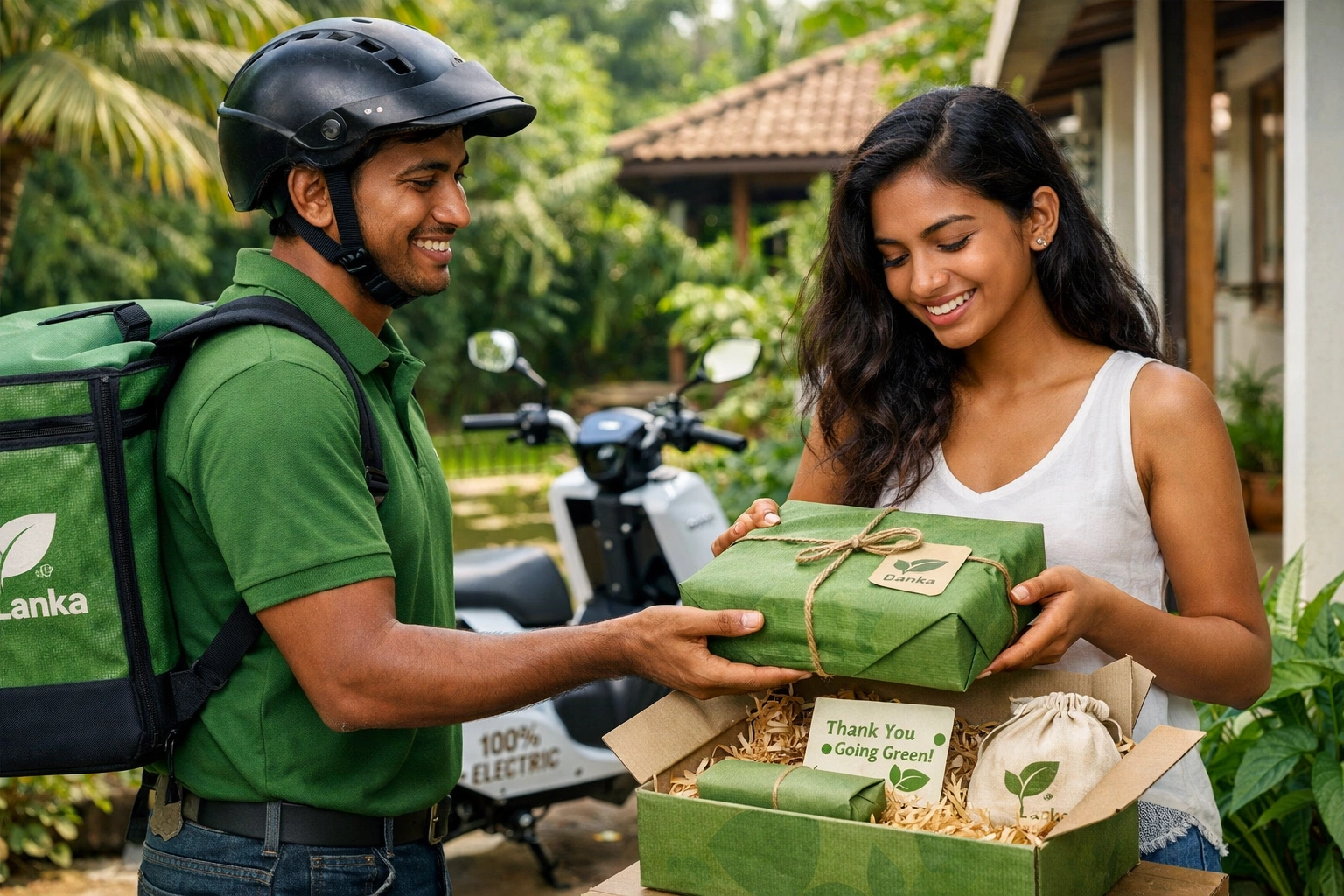
Implementation Strategy for 2026:
- Switch to recyclable/compostable packaging with visible branding
- Partner with EV logistics providers for last-mile delivery
- Publish sustainability metrics annually: carbon offset, packaging waste diverted
- Offer “offset shipping” option allowing customers to fund tree planting
- Source products from fair-trade and sustainable suppliers
The Sri Lankan E-Commerce Opportunity in 2026
The market data is compelling: e-commerce revenue in Sri Lanka reached USD 3.347 billion in 2024 and is projected to exceed USD 3.9 billion by 2029 at 10.8% annual growth. This 50% expansion represents billions in opportunity for businesses that move decisively.
Yet opportunity without execution is fantasy. Success requires integrating these 16 benefits into coherent strategy: choosing technology wisely, implementing systematically and optimizing continuously based on data.

How Mobiz International Helps Launch E-Commerce Success in 2026
As Sri Lanka’s leading web design and development agency specializing in eCommerce solutions, Mobiz International guides businesses through these opportunities strategically:
Custom E-Commerce Platform Development
- Fully responsive, PWA-enabled storefronts optimized for 4G networks
- Integrated with local payment gateways (LankaQR, PayHere, FriMi, bank transfers)
- AI-powered recommendation engines and personalization
- Multilingual interface supporting Sinhala, Tamil and English
- Real-time analytics dashboards for performance monitoring
Hyperlocal Logistics Integration
- Same-day delivery coordination for Colombo metro
- Island-wide shipping calculator with FriMi pickup point integration
- Live tracking and SMS/WhatsApp delivery updates
Digital Marketing and Performance Optimization
- Conversion rate optimization (CRO) through A/B testing and heatmap analysis
- SEO strategy targeting Sri Lankan search intent
- Paid advertising management across Google, Facebook and Instagram
- Email marketing automation for retention and upsell
Ongoing Support and Optimization
- Monthly analytics reviews and strategic recommendations
- Security updates and compliance audits
- Feature releases aligned with emerging trends
- Team training on new tools and features
Conclusion: The Time for E-Commerce Transformation is Now
The e-commerce landscape in Sri Lanka in 2026 offers unprecedented opportunity for businesses willing to embrace digital transformation. With 13.9 million internet users, growing smartphone penetration, mature payment infrastructure and increasing consumer comfort with online shopping, the fundamentals are sound.
Businesses that leverage these 16 benefits—combining AI intelligence, hyperlocal delivery, social commerce integration, mobile optimization and customer obsession—will capture disproportionate market share. Early movers build scale, network effects and brand momentum that compound over years.
The question isn’t whether your business needs e-commerce in 2026. The question is whether you’ll lead or follow.
Ready to transform your business with a powerful, AI-enabled e-commerce presence optimized for 2026 and beyond? Contact Mobiz International today to discover how our tailored eCommerce solutions can help your Sri Lankan business thrive in the digital marketplace.
Visit https://www.joomlasrilanka.com/ecommerce-website-design-development-in-sri-lanka/ to explore our comprehensive eCommerce design and development services.
Mobiz International Pvt Ltd is a full-service web design and development company in Sri Lanka specializing in e-commerce solutions, responsive web design, SEO, mobile app development, and inclusive digital solutions for businesses of all sizes.
Your are one click away from the best company for web design in sri lanka
References
- https://www.statista.com/outlook/emo/ecommerce/sri-lanka
- https://www.researchandmarkets.com/reports/6191231/sri-lanka-b2c-ecommerce-market-size-and-forecast
- https://ecdb.com/resources/sample-data/market/lk/all
- https://datareportal.com/reports/digital-2026-sri-lanka
- https://lankafix.com/e-commerce-boom-hyperlocal-shopping-in-sri-lanka/
- https://www.lankawebsites.com/tech-news/the-future-of-e-commerce-web-design-in-sri-lanka-in-2026/
- https://www.lankawebsites.com/tech-news/digital-marketing-trends-in-sri-lanka-for-2026/
- https://lankanewsweb.net/archives/138595/sri-lankas-digital-economy-hits-rs-1-3-trillion-driving-growth-and-innovation/
- https://echelon.lk/commercial-bank-shaping-the-future-of-mobile-and-card-payment-solutions
- https://www.yotpo.com/blog/ecommerce-trends-2026/
- https://shoprank.com/countries/sri-lanka
- https://www.shopaccino.com/blog/mobile-commerce-trends-2026-what-every-brand-must-know
- https://mot.gov.lk/assets/files/National%20Digital%20Economy%20Strategy%202030%20Sri%20Lanka
- https://www.novalnet.com/blog/payment-trends-2026-what-will-shape-the-next-era-of-digital-payments/