




The Automation Shockwave: Colombo’s Entry-Level Tech Crisis
For years, Colombo’s thriving tech sector was a beacon of hope for young graduates. An IT or software engineering degree was seen as a direct path to a stable, well-paying career. However, a powerful shift is underway. The rise of Artificial Intelligence (AI) and automation is creating a shockwave, and the first to feel its impact are the entry-level jobs that once welcomed a new generation into the industry.

The traditional stepping stones for a tech career are starting to disappear. Roles that involved basic coding, routine software testing, and data entry were perfect for junior developers and quality assurance (QA) engineers to learn the ropes. Now, sophisticated AI tools can handle these tasks with incredible speed and accuracy. Companies are adopting AI to write clean code, automate repetitive tests, and process large amounts of data, reducing the need for large teams of entry-level staff.
This creates a significant challenge for Colombo’s young talent pool. With fewer starting positions available, it has become much harder for recent graduates to get their first job and gain critical hands-on experience. The competition for each junior role is fierce, leaving many aspiring professionals feeling uncertain about their future. This situation highlights AI’s double edge, where the same technology that eliminates some jobs also creates a demand for new, higher-level skills. The city is facing an entry-level crisis that requires an urgent plan to help its new workforce adapt and succeed.
The Upskilling Imperative: Bridging the Gap to AI Specialization
The tech world in Colombo is changing fast. Automation and AI are now handling many basic tasks that were once done by entry-level tech workers. This creates both a challenge and an opportunity. To stay ahead, professionals must learn new skills. This process is called upskilling, and it is the key to moving from a threatened job to a leadership role in the AI-driven future.
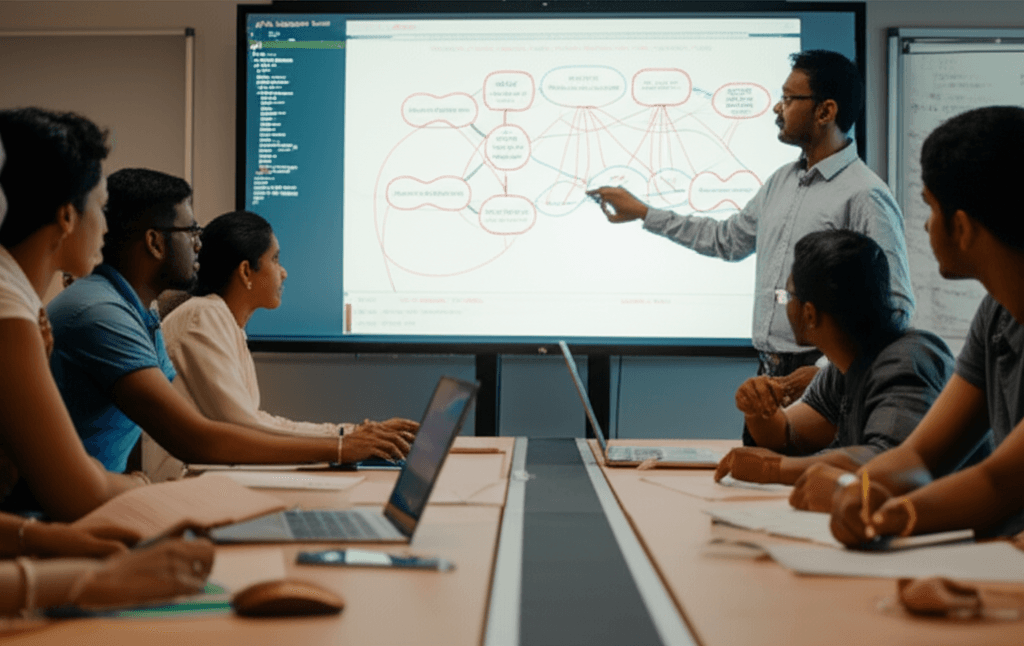
The gap between old skills and new demands is clear. While some roles may disappear, many new, high-skill positions are opening up. As detailed in AI’s double edge for Sri Lankan software engineers, the future belongs to those who can work with intelligent systems. Instead of just writing simple code, developers will need to understand machine learning, data analysis, and how to integrate AI tools into websites and business processes. This could mean building smarter chatbots for customer service or creating personalized shopping experiences for e-commerce stores.
So, how can you bridge this gap? The path to AI specialization is more accessible than ever. You don’t need a university degree in data science to start. Online courses, professional certifications, and company-led training programs offer flexible ways to learn. By focusing on practical skills, tech workers can build a strong foundation. This prepares them to contribute to advanced projects and eventually lead the charge in AI development in Sri Lanka. Taking the first step to learn a new AI skill today is an investment in a secure and successful career for tomorrow.
Forging an AI Powerhouse: Building Colombo’s Ecosystem
To become a leader in Artificial Intelligence, Colombo cannot rely on single companies alone. It needs a strong community, or ecosystem, where everyone works together. This team effort involves the government, universities, and private businesses. Each group has a vital role to play in building a future-proof tech industry.

The government can lead by creating smart policies. This includes funding for AI research and making it easier for new AI startups to grow. At the same time, universities must update their programs. They need to teach students the skills that matter, like machine learning, data science, and AI ethics. By partnering with tech companies, universities can give students real-world experience before they even graduate.
Private companies are at the heart of this change. They must invest in training their current workers, helping them move from basic tasks to advanced AI roles. By offering internships and apprenticeships, businesses can help shape the next generation of tech talent. This creates a workforce that is not just ready for the future but is actively building it. For example, local e-commerce agencies can use AI to offer advanced services beyond simple maintenance packages, creating new revenue streams.
When these three groups collaborate, they create a powerful cycle. Skilled graduates find great jobs, companies create innovative AI solutions, and the whole city becomes a magnet for talent and investment. This teamwork is the key to managing AI’s double-edged impact, ensuring that automation creates more opportunities than it replaces. By building this strong ecosystem, Colombo can secure its place as a true AI powerhouse in the region.
The Vision for Tomorrow: Colombo as a Global AI Hub
Colombo is at a turning point. While automation is changing some jobs, it also opens a new door. The city has a chance to become a leader in Artificial Intelligence (AI) not just in Sri Lanka, but in the entire region. This is not just a dream; it is a real goal we can work towards. By embracing this change, Colombo can transform its tech industry from providing support services to creating world-class AI innovations.

To get there, we must shift our focus. Instead of basic coding and data entry, our tech workers need to learn new skills. This means training in machine learning, data science, and AI development. The challenge of job losses can become an opportunity for growth, creating new high-skill roles that pay better and are more secure. This change will build a stronger and more advanced workforce.
Where can Colombo shine? We can create AI solutions for our key industries. Think about AI that helps tea exporters predict crop yields or smart systems for the tourism sector. E-commerce is another big area where AI can personalize shopping for customers and make businesses more efficient. By focusing on these local needs, we can build unique skills and products to sell to the world.
Making this vision a reality needs teamwork. Universities must update their courses. The government can offer support for AI startups, and companies need to invest in training their employees. With a strong plan, Colombo can move from doing simple tasks to leading the way in AI development in Sri Lanka. The future is not about fearing automation, but about mastering it to build a brighter economic future for everyone.
References
- World Economic Forum. (2023). The Future of Jobs Report 2023. Retrieved from weforum.org.
- McKinsey & Company. (2023, August 1). The state of AI in 2023: Generative AI’s breakout year. Retrieved from mckinsey.com.
- SLASSCOM. (2022). SLASSCOM AI Strategy for Sri Lanka. An overview of the national strategy for adopting Artificial Intelligence by Sri Lanka’s apex IT/BPM industry body. Retrieved from slasscom.lk.
- Daugherty, P. R., & Wilson, H. J. (2018, July-August). Human + Machine: Reimagining Work in the Age of AI. Harvard Business Review. Retrieved from hbr.org.