




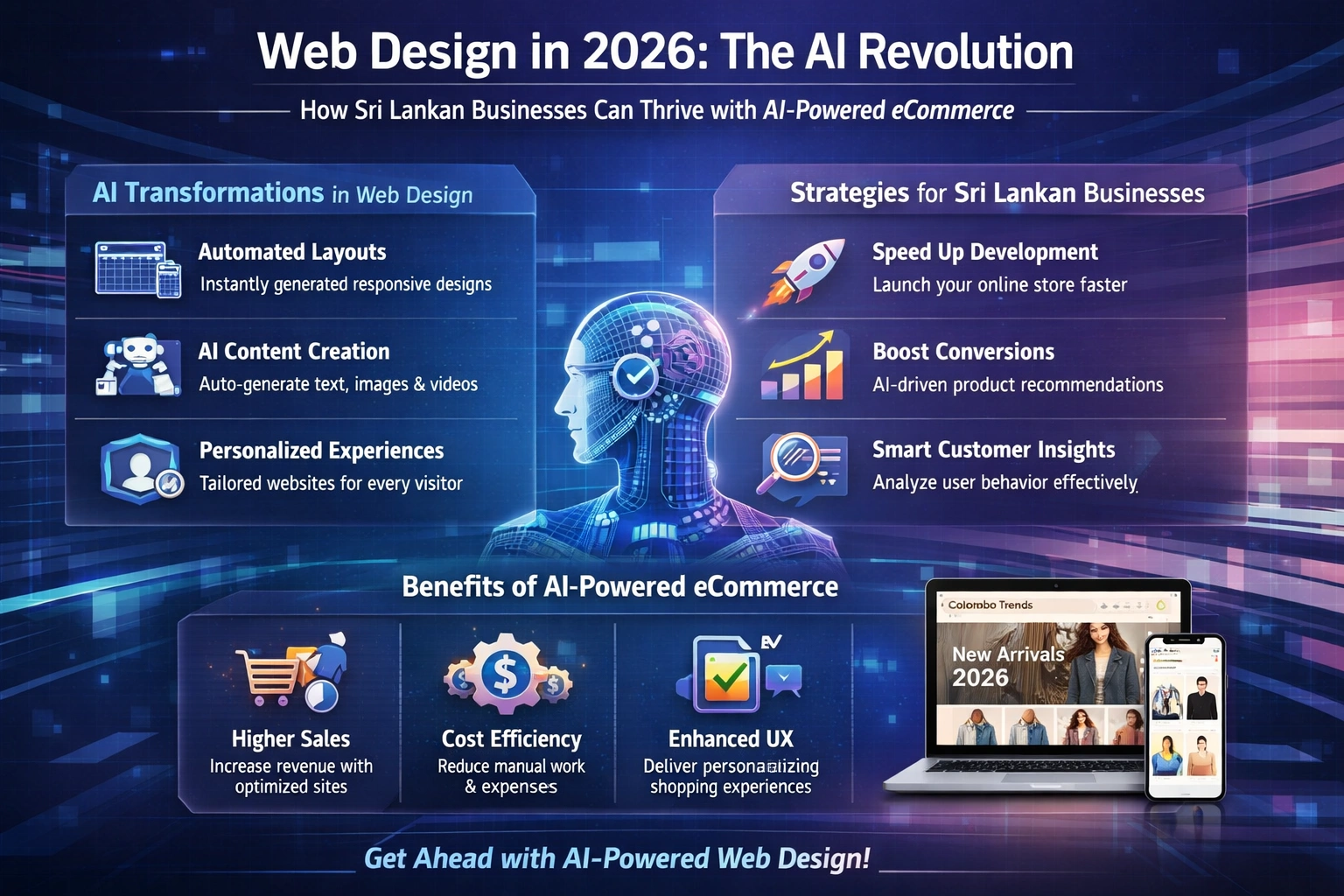
The web design industry faces a profound shift as AI tools automate routine tasks, enhance creativity and enable hyper-personalized user experiences, particularly relevant for Sri Lankan businesses building competitive online stores. This adaptation accelerates development cycles while demanding new skills in prompt engineering and ethical AI integration. For firms specializing in eCommerce website design and development in Sri Lanka, embracing AI means delivering sites that evolve with user behavior in real time.
AI Tools Transforming Design Workflows
AI platforms now generate wireframes, color palettes and full layouts from text prompts, slashing initial design time from weeks to hours. Tools like Framer AI and Uizard convert sketches or descriptions into responsive prototypes, allowing designers to iterate rapidly on mobile-first interfaces critical for Sri Lanka’s smartphone-dominant market.
- Figma’s AI plugins suggest design variations based on user heatmaps and A/B test data, optimizing elements like button placement for higher conversions.
- Midjourney and DALL-E produce custom visuals, replacing stock images with brand-aligned graphics tailored to local aesthetics, such as vibrant Sri Lankan motifs for fashion eCommerce sites.

Beyond visuals, AI analyzes competitor sites to recommend SEO-optimized structures, ensuring new eCommerce platforms rank quickly for terms like “online shopping Sri Lanka.”
Automation in Code Generation and Development
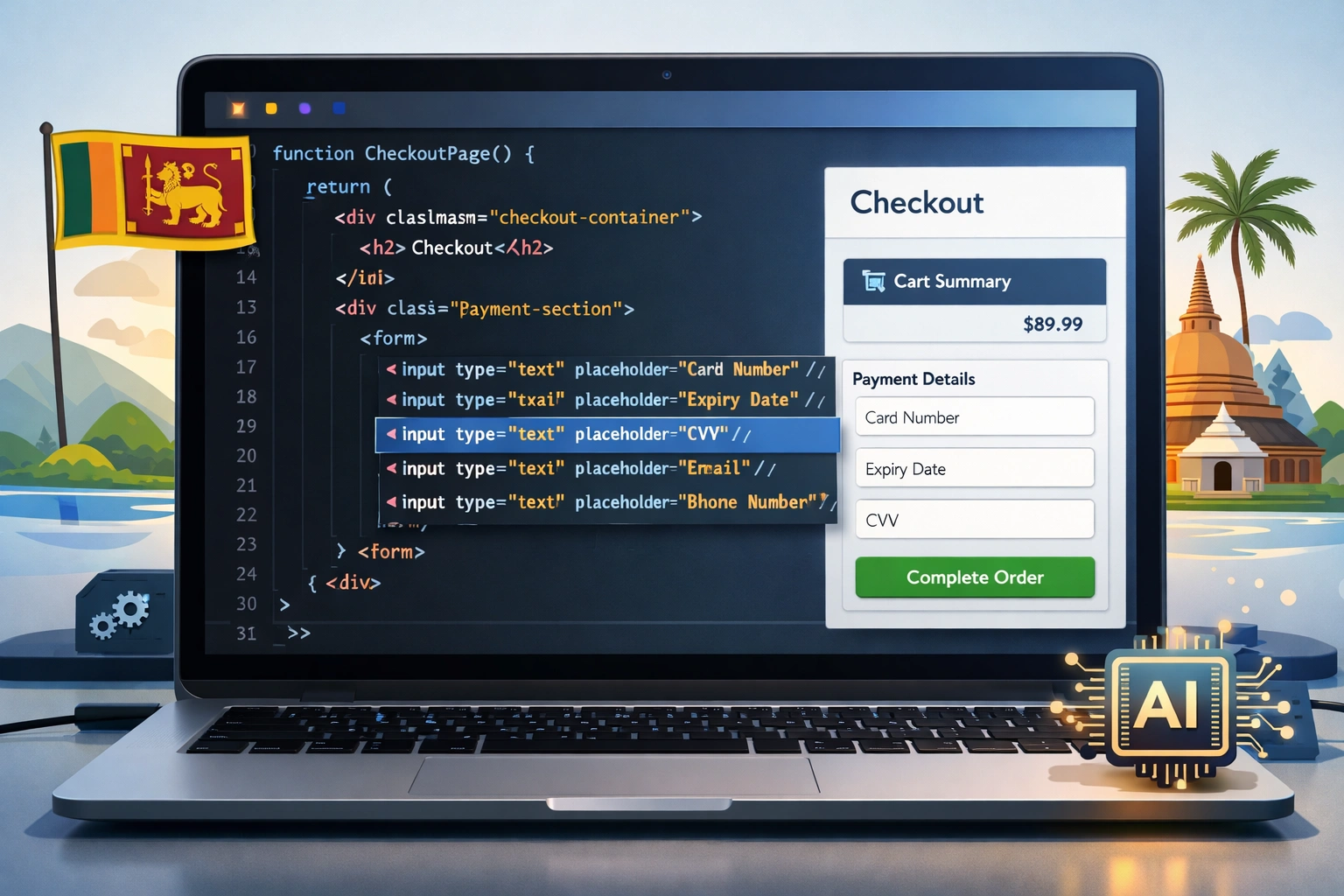
No-code and low-code AI builders like Wix ADI or Bubble’s AI assistant create functional websites with integrated payment gateways and inventory management, ideal for small Sri Lankan exporters launching quickly. GitHub Copilot and Cursor AI write clean PHP, JavaScript and CSS, handling complex features like dynamic product filters or Laravel-based carts used in custom eCommerce solutions.
Developers now focus on oversight rather than boilerplate, debugging AI-generated code for security vulnerabilities and local compliance, such as LankaPay integrations. This shift boosts productivity by 40-60%, enabling agencies to handle more projects without scaling teams.
Personalization and User Experience Enhancements
AI drives dynamic sites that adapt content, recommendations and layouts per visitor, using machine learning to predict preferences based on browsing history and location. For Sri Lankan eCommerce, this means Tamil/Sinhala language toggles, rupee pricing and hyperlocal delivery estimates appearing instantly. Tools like Optimizely AI test thousands of variants, refining CTAs for urban Colombo shoppers versus rural audiences.
Voice search optimization via AI ensures sites respond to queries like “best spices online Sri Lanka,” integrating schema markup automatically. Chatbots powered by GPT models handle 80% of customer queries, from order tracking to size recommendations, reducing support costs.
Content Creation and SEO Revolution
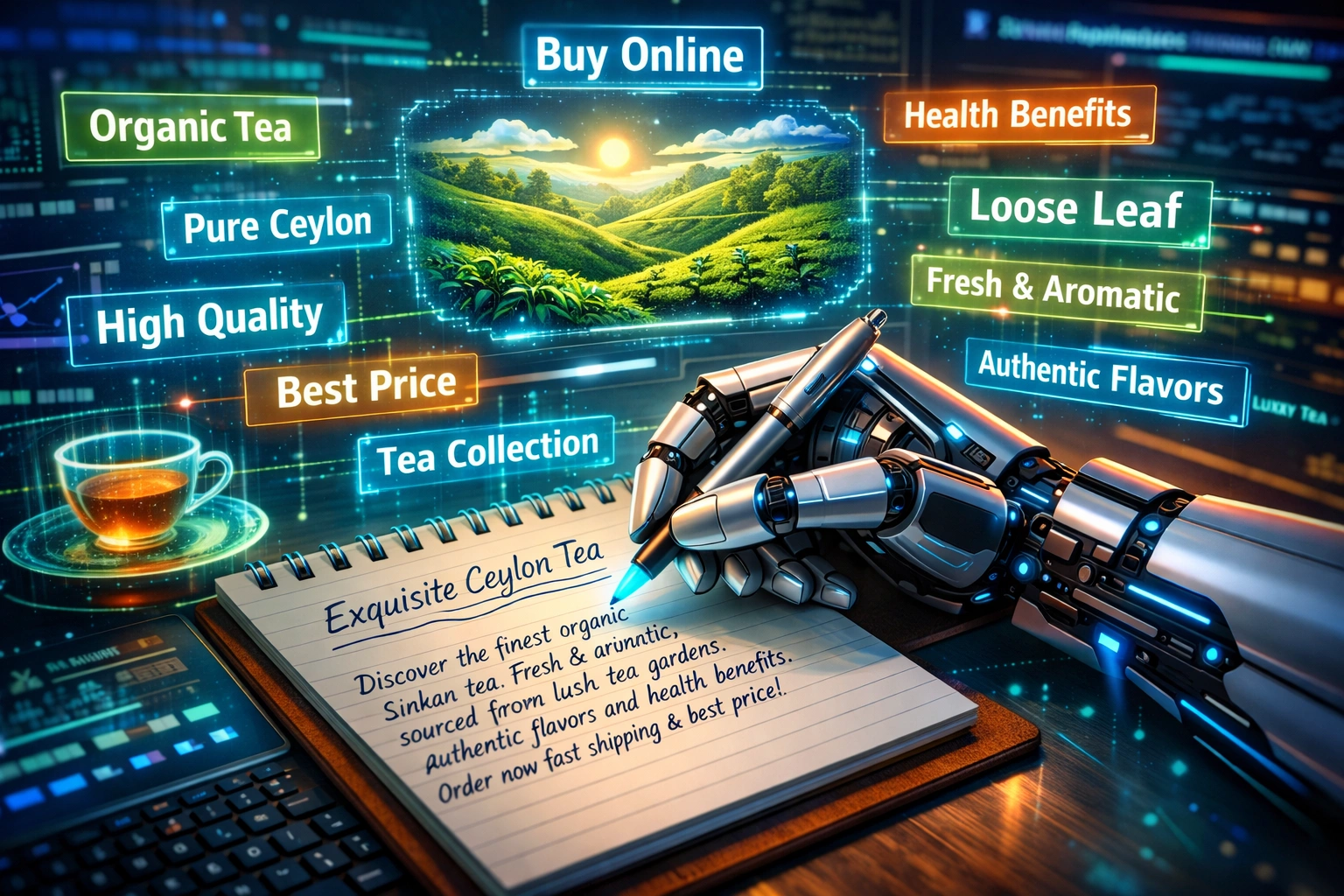
Jasper and Copy.ai generate product descriptions, blog posts and meta tags optimized for local search intent, incorporating long-tail keywords naturally. These tools analyze top-ranking pages to suggest improvements, boosting organic traffic for new eCommerce sites within months.
AI also audits sites for Core Web Vitals, suggesting compressions and lazy loading to achieve 90+ Lighthouse scores, essential for Google rankings in competitive niches like electronics or apparel.
Challenges and Ethical Considerations
Over-reliance on AI risks generic designs lacking cultural nuance, such as ignoring Sri Lanka’s bilingual needs or festive design elements for Avurudu sales. Human oversight ensures accessibility compliance, like WCAG for visually impaired users, and data privacy under local PDPA drafts.
Bias in AI training data can skew recommendations, so designers audit outputs for fairness, especially in diverse markets blending urban millennials with traditional shoppers. Balancing automation with creativity prevents “AI sameness,” where sites blend into indistinguishable templates.
Upskilling and New Roles Emerging
Web design teams now include AI prompt engineers, ethics specialists and data analysts, with platforms like Udemy offering Sri Lanka-specific courses. Agencies train on tools like Adobe Firefly for compliant image generation, avoiding copyright issues.
Freelancers thrive by specializing in AI-human hybrid workflows, commanding premiums for bespoke eCommerce sites that integrate Vue.js frontends with AI backends.

Future Outlook for AI in Web Design
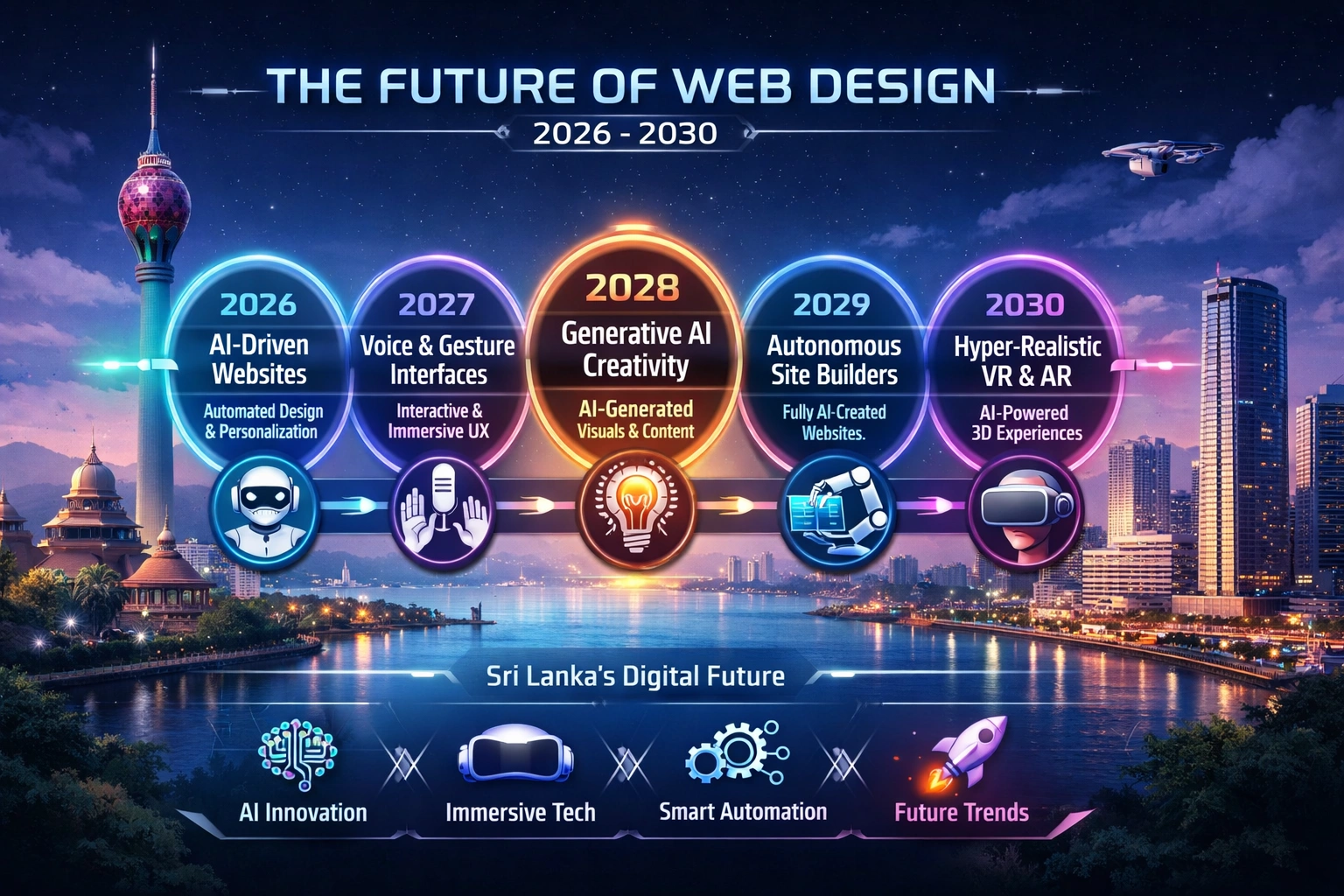
By 2027, generative AI will compose entire sites from voice briefs, with AR previews letting users “walk through” virtual stores on mobile. Edge AI will enable real-time personalization without servers, cutting costs for Sri Lankan SMEs.
Predictive analytics forecast inventory and traffic spikes for events like Black Friday or Sinhala New Year, automating promotions. Blockchain-AI hybrids ensure secure, transparent transactions, positioning local platforms for regional exports to India and Maldives.
Quantum computing experiments promise instant design renders, while neuromorphic chips mimic brain-like creativity for truly intuitive UIs.
Strategies for Sri Lankan Web Agencies
Prioritize hybrid models blending AI speed with human polish for standout eCommerce sites. Invest in local AI fine-tuning for Sinhala/Tamil support and rupee fluctuations.
Partner with platforms offering white-label AI tools to scale services without overhead. Track metrics like design-to-launch time and client ROI to validate adaptations.
Businesses seeking AI-enhanced eCommerce website design and development in Sri Lanka benefit from partners who master these trends, ensuring scalable, future-proof online stores at https://www.joomlasrilanka.com/ecommerce-website-design-development-in-sri-lanka/.
References
- https://www.smashingmagazine.com/2025/01/ai-web-design-trends-2025/
- https://www.awwwards.com/ai-in-web-design.html
- https://uxdesign.cc/ai-powered-web-design-tools-2026
- https://www.figma.com/blog/ai-design-tools/
- https://framer.com/ai
- https://uizard.io/
- https://www.adobe.com/sensei.html
- https://copilot.github.com/
- https://www.optimizely.com/ai/
- https://jasper.ai/