



The Double-Edged Sword: AI as Tourism’s Savior and Disruptor
Artificial Intelligence (AI) is a powerful tool helping the tourism industry recover. Companies are using AI to create highly personal travel experiences. By analyzing a traveler’s past trips and preferences, AI can suggest unique activities, find the best restaurants, and offer custom deals. This level of AI personalization makes visitors feel special and boosts sales for businesses.
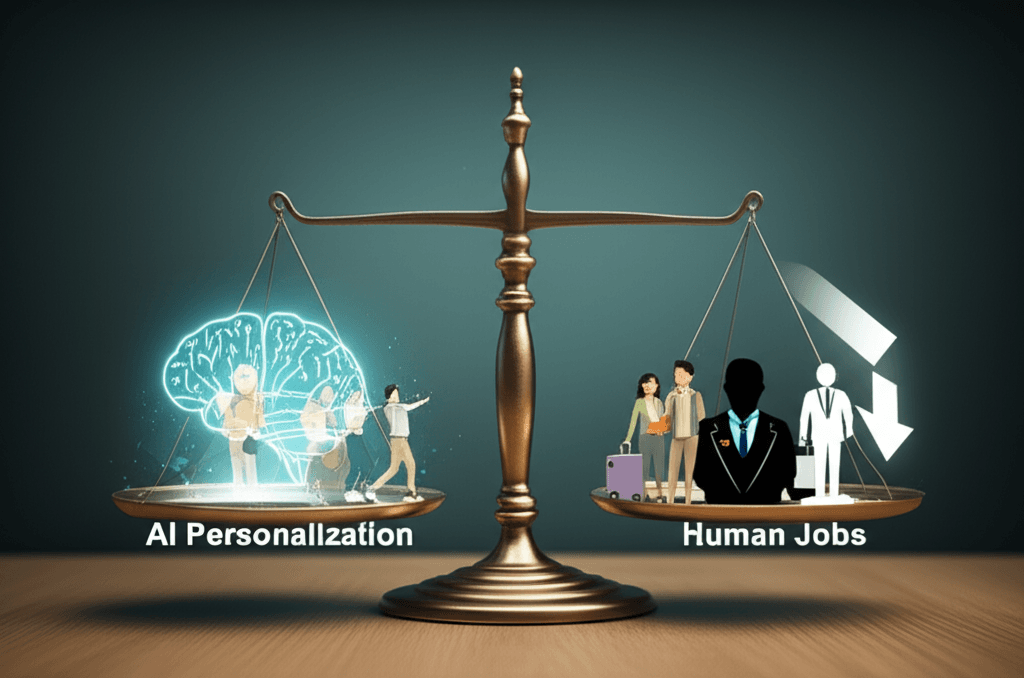
However, this progress comes with a downside. The same AI that designs the perfect vacation is also changing the job landscape in tourism hubs. Tasks once handled by front-desk staff, concierges, and travel agents are now automated. Smart chatbots can answer questions 24/7, and apps can handle bookings instantly. While efficient, this shift means fewer jobs for people in the service sector.
The real problem is how this change is hidden. A tourist can get instant, excellent service from an AI system and feel completely satisfied. They might not know that this technology replaced a human worker. The seamless experience masks the reality of job cuts in hotels and travel agencies. This situation highlights AI’s double edge, where innovation can lead to both growth and job displacement. Finding a balance is the key challenge for the future of tourism.
The Hyper-Personalized Journey: How AI is Reshaping Travel
Imagine a vacation planned just for you, down to the smallest detail. This is the promise of hyper-personalization, and Artificial Intelligence (AI) is making it a reality. Instead of generic travel packages, AI analyzes your past trips, online searches, and even your budget to create a unique itinerary. It designs your entire experience, from the hotel you stay in to the specific tours and restaurants that match your tastes. This level of customization makes travel more appealing and efficient for tourists.

Today, powerful AI tools act as your personal travel assistant, available around the clock. AI-powered chatbots and virtual assistants can answer questions, book tickets, and adjust your plans instantly. Hotels use AI to remember your preferences, like your favorite pillow type or room temperature. This seamless and responsive service creates a fantastic customer experience, encouraging more people to travel and helping the tourism sector recover financially.
However, this high-tech convenience has a hidden side. The friendly hotel concierge or helpful travel agent is increasingly being replaced by an algorithm. While a traveler enjoys flawless automated service, this efficiency masks a difficult truth: thousands of service worker jobs in major tourism hubs are disappearing. The industry is regaining its profits without fully restoring its workforce. This trend highlights AI’s double edge, where technology improves the journey for the guest but can remove the human jobs that once supported it.
The Invisible Layoffs: Automation’s Impact on the Service Workforce
As tourism in Sri Lanka’s key hubs shows signs of recovery, a positive story emerges of bustling hotels and growing visitor numbers. However, a closer look reveals a hidden trend. Many of the service jobs that were once the backbone of the hospitality industry have not returned. This is the story of the invisible layoff, driven by the quiet rise of automation.
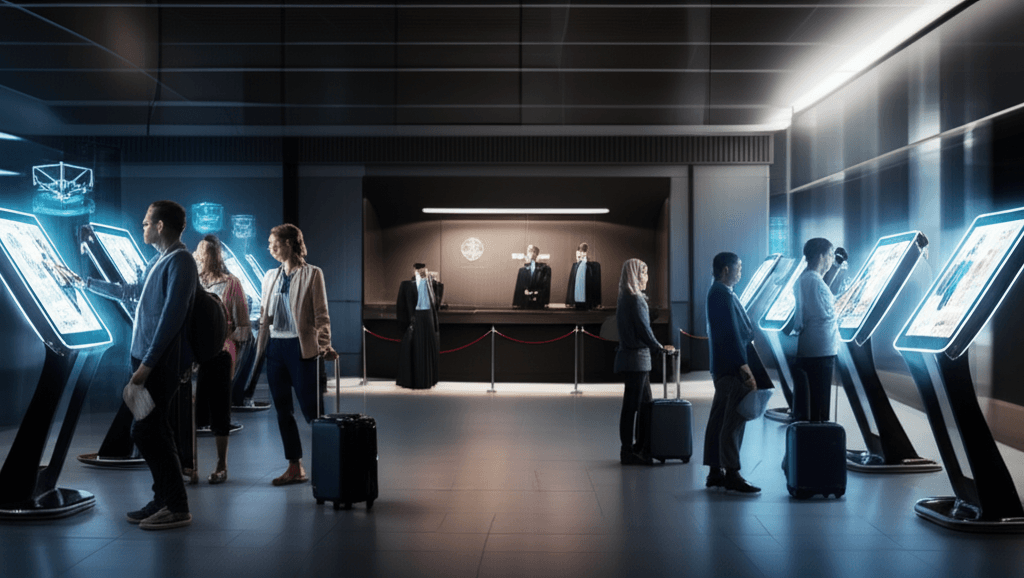
Before the recent downturns, booking a hotel or planning a tour often involved speaking with a person. Today, many of those tasks are handled by technology. Hotels and travel companies now use AI-powered systems to offer a highly personalized experience. For example, AI chatbots handle customer questions 24/7, and self-service kiosks in hotel lobbies allow guests to check in without ever speaking to a receptionist. Personalized apps can now act as a digital concierge, suggesting tours and restaurants based on a user’s past behavior.
While these tools make travel smoother for tourists, they reduce the need for human workers. Front-desk clerks, booking agents, and customer service representatives are finding their roles automated. A hotel can now manage a full house with a much smaller staff. This efficiency boosts profits for business owners but leaves former employees without work.
This shift creates a major challenge. The jobs being eliminated are often entry-level service positions, while the new roles created are in high-skill tech fields. This highlights AI’s double edge, where traditional jobs disappear and are replaced by technical roles that require different training. As the tourism industry rebuilds, it is also reshaping its workforce, and many are being left behind in this technological transition.

Forging a New Path: Integrating AI with a Human Touch
The goal of using AI in tourism is not to replace people entirely. Instead, the best approach combines the power of technology with the warmth of human interaction. This blend can create a travel experience that is both efficient and memorable. It allows Sri Lanka’s tourism sector to rebuild smarter, not just bigger.
AI is excellent at handling routine tasks. It can manage bookings, answer common questions 24/7, and suggest personalized travel plans based on a user’s past behavior. This automation frees up time and resources. For example, AI can help hotels and travel agencies boost conversions and customer satisfaction by offering tailored recommendations instantly. This makes the planning process smoother for tourists and allows businesses to operate with a smaller, more focused staff.
However, technology cannot replace the genuine connection that a human can provide. A friendly smile from a hotel receptionist, a helpful tip from a local guide, or a chef explaining a special dish are moments that make a trip special. These personal touches build lasting memories and encourage visitors to return. Human employees are also better at solving complex or unexpected problems with empathy and creativity.
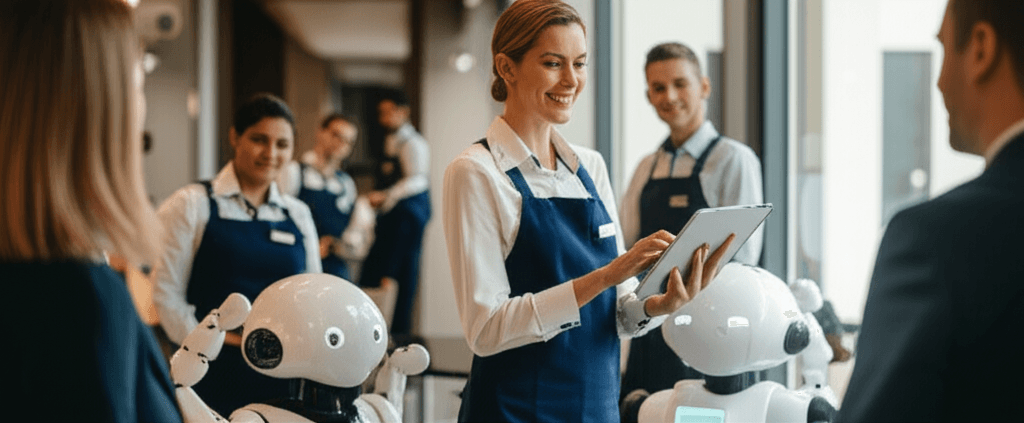
The ideal model is a hybrid one. An AI-powered chatbot could handle initial inquiries on a hotel website, but a human agent steps in for more detailed requests. At an airport, self-service kiosks can speed up check-in, while staff are available to help families or travelers with special needs. By letting AI handle the repetitive work, human staff can focus on what they do best: providing exceptional, high-quality service. This strategy helps boost the tourism business while ensuring that the famous Sri Lankan hospitality remains at its core.
References
- World Economic Forum, “The Future of Jobs Report 2023.” This report provides a broad analysis of macroeconomic trends and technology adoption, including AI, and its expected impact on jobs and skills over the next five years.
- Skift, “The Definitive Oral History of Online Travel.” An in-depth look at how technology has historically transformed the travel industry, providing context for the current shift towards AI-driven personalization and automation.
- Wikipedia, “Technological unemployment.” Offers a comprehensive overview of the concept where technological change, particularly automation, leads to job losses.
- McKinsey & Company, “Travel and hospitality: AI is your most powerful copilot for customer care.” An industry analysis on how generative AI can be implemented to enhance customer experience, boost efficiency, and drive revenue in the tourism sector.