




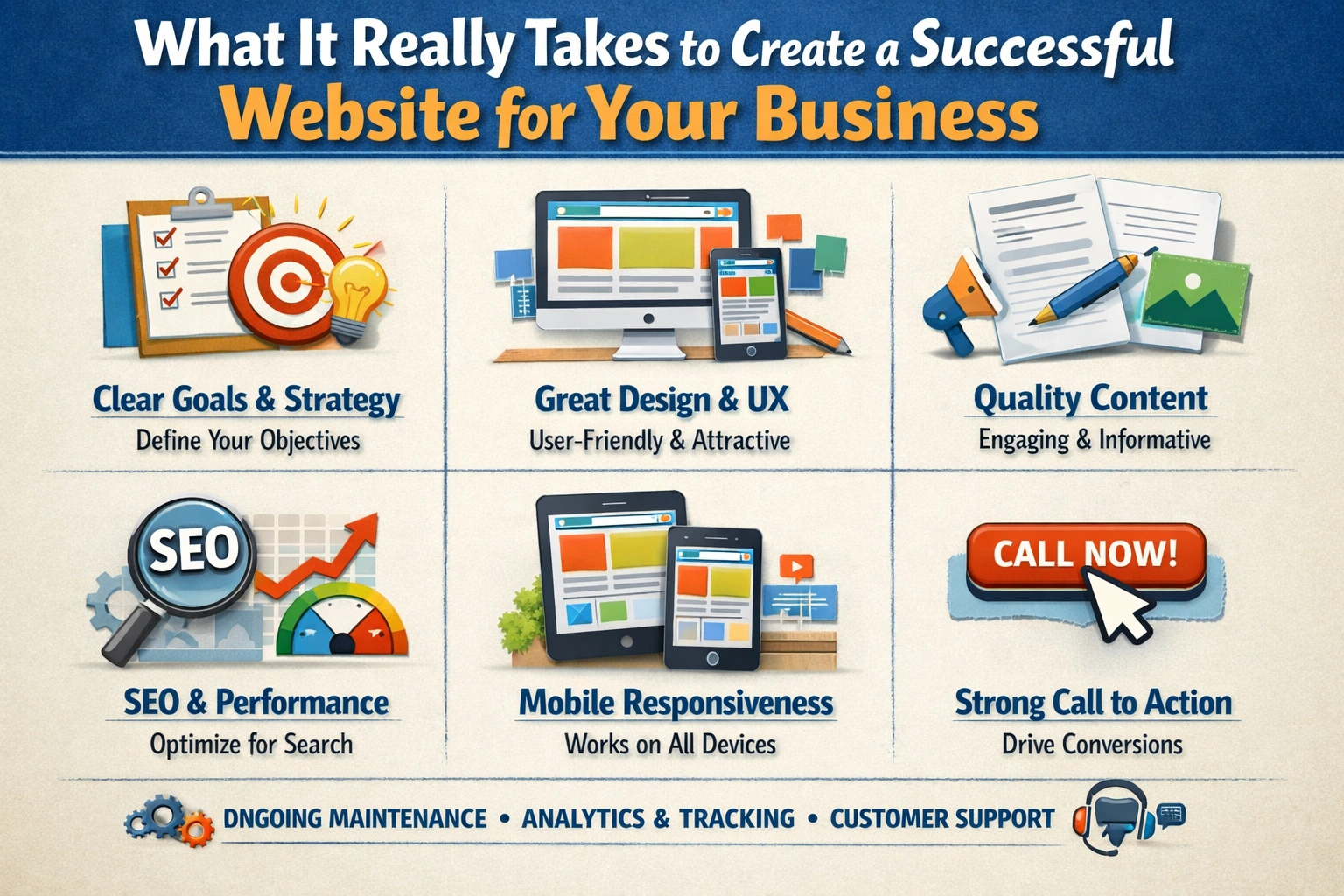
A successful website in 2026 is far more than a digital storefront; it’s a revenue-generating engine that combines technical excellence, strategic design, customer psychology and continuous optimization. For Sri Lankan businesses competing locally and regionally, understanding these foundations separates thriving online ventures from abandoned domains. This article dissects the proven pillars every serious business website must rest on.
Foundation 1: Crystal-Clear Understanding of Your Target Audience
Before designing a single pixel or writing a line of code, businesses must answer a fundamental question: who are you serving?
Target audience analysis isn’t optional—it’s the blueprint for everything that follows. Understanding customer pain points, search behaviour, device preferences and language requirements shapes product pages, navigation, copy tone and even colour schemes.
For a Sri Lankan spice exporter, this means recognizing that international B2B buyers research on desktop (inspecting certifications, MOQ, pricing), while domestic retail customers shop via mobile (Sinhala/English interface, WhatsApp contact). Generic websites fail this test; tailored ones convert.

Conduct surveys, analyze Google Trends for your niche, monitor social media discussions and create detailed buyer personas. This groundwork informs every decision downstream.
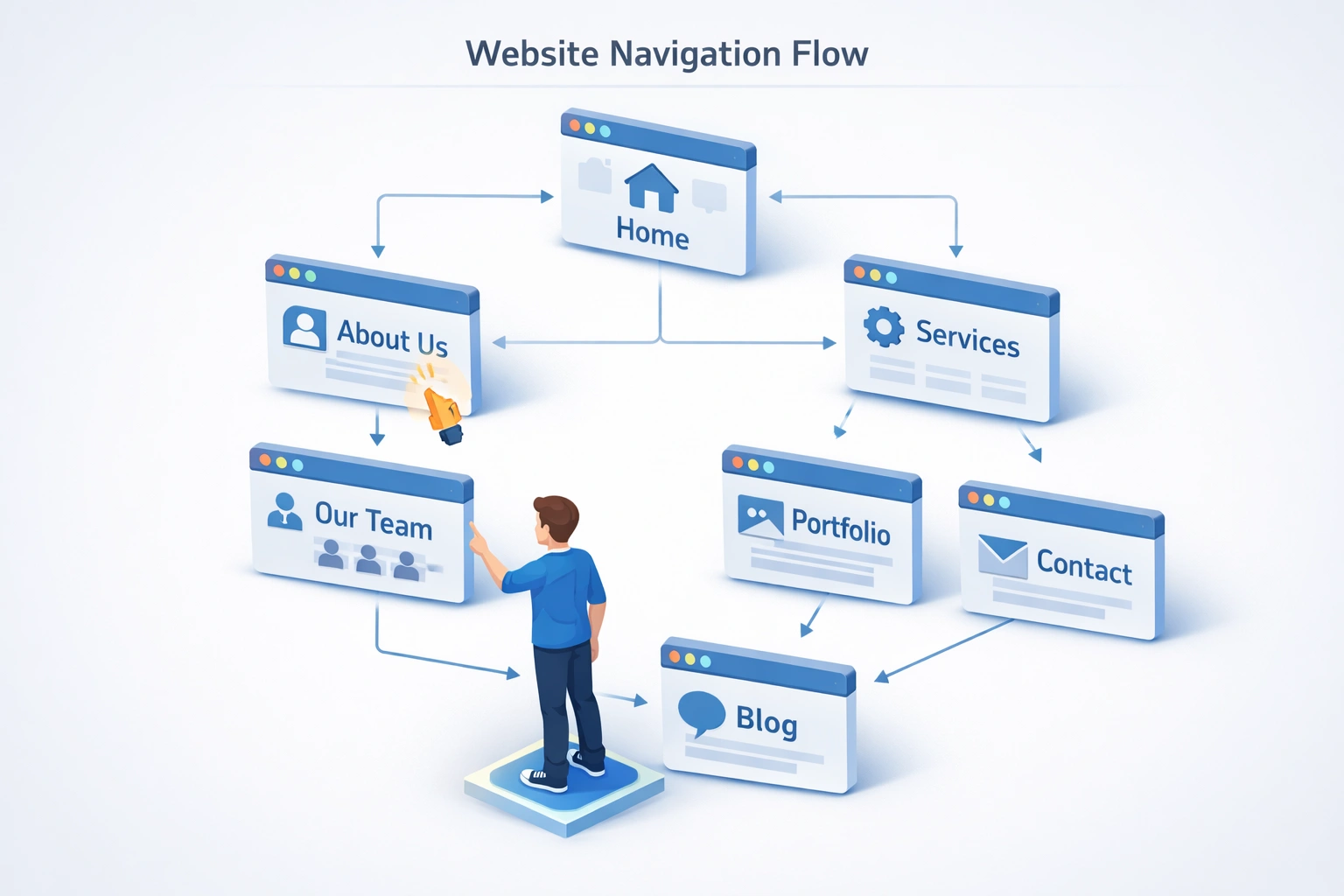
Foundation 2: Information Architecture and Navigation Simplicity
Research shows users judge websites in 50 milliseconds; if they can’t find what they need in the first 3 clicks, they leave.
Effective navigation means:
- Flattening menus to 2-3 levels maximum, avoiding nested chaos
- Placing critical CTAs (Shop Now, Book Demo, Contact) above the fold with contrasting colours
- Including a prominent site search bar, essential for product-heavy sites
- Breadcrumb trails helping users understand their location
- Sticky headers keeping navigation accessible while scrolling
For eCommerce, faceted navigation (filtering by price, category, colour) reduces bounce rates by 30%.
Foundation 3: Mobile-First Design and Speed Obsession
Over 75% of Sri Lankan internet traffic originates from mobile devices; websites not optimized for smaller screens are dead on arrival.
Mobile-first design means building for 5-inch screens first, then scaling up to desktops—not the reverse. Every interactive element, image and form field must work flawlessly on touch.
Speed, however, is non-negotiable: a 1-second delay causes 7% conversion loss. Optimization requires:
- Image compression (WebP format reduces file sizes 25-35%)
- Lazy loading (images load only when visible)
- Content Delivery Networks (CDNs) serving assets from servers near users
- Minimized CSS/JavaScript through bundling
- Core Web Vitals targets: LCP under 2.5s, FID under 100ms, CLS under 0.1
Testing tools like Google PageSpeed Insights reveal bottlenecks; fixing them drives tangible revenue gains.

Foundation 4: Trust Signals and Security
Websites lacking HTTPS (SSL certificates), visible contact details or trust badges lose 80% of potential customers.
Essential trust elements include:
- SSL certificates (padlock icon in address bar)
- Clear company address, phone and email
- Transparent privacy policies and refund terms
- Customer testimonials and case studies
- Recognizable payment gateway logos (Visa, PayPal, local gateways)
- Trust seals from verified services
- Consistent branding across all pages
For Sri Lankan eCommerce, explicitly mentioning accepted payment methods (LankaQR, FriMi, debit cards, cash-on-delivery) and delivery details (same-day in Colombo, island-wide tracking) dramatically reduces purchase anxiety.
Foundation 5: Compelling, SEO-Optimized Content
Websites fail silently when nobody can find them. SEO-optimized content bridges this gap.
Content must serve dual purposes: rank in search engines AND persuade visitors. This means:
- Homepage headline directly answering what the business does (avoid vague taglines)
- Product/service pages including target keywords naturally 3-5 times
- Meta titles (60 characters) and descriptions (155 characters) crafted for clicks
- Structured data (schema markup) helping Google understand your content
- Blog posts targeting long-tail keywords (e.g., “affordable eCommerce website design for small spice businesses Sri Lanka”)
- Internal linking connecting related content, boosting authority
For Sri Lankan businesses, this includes bilingual content (Sinhala/English at minimum), addressing local search intent.

Foundation 6: Conversion Rate Optimization (CRO)
Traffic without conversions is vanity. CRO transforms visitors into customers through systematic testing and psychology.
Key CRO principles:
- Clear value propositions: Immediately tell visitors why they should choose you
- Prominent CTAs: “Add to Cart” buttons in contrasting colours, appearing multiple times
- Minimal form fields: Asking for 20 fields kills conversions; 3-5 suffice
- Social proof: Displaying star ratings, review counts and user testimonials
- Urgency and scarcity: “Only 3 left in stock,” countdown timers for limited offers
- Exit-intent popups: Offering discounts before users leave
- A/B testing: Comparing two versions (button colour, headline wording) to identify winners
- Personalization: Showing different content to first-time vs. returning visitors
Data from leading eCommerce sites shows A/B tested changes yield 10-300% conversion improvements.
Foundation 7: AI-Powered Personalization and Chatbots
In 2026, AI is baseline, not premium. Websites using AI personalization see 300% conversion uplift.
Essential AI capabilities:
- Product recommendations: “Customers who bought X also bought Y”
- Dynamic content: Showing different page versions based on visitor location or device
- Chatbots: Handling FAQ, product queries and order tracking 24/7
- Predictive analytics: Identifying at-risk cart abandonments and triggering interventions
- Email personalization: Subject lines, product suggestions and send times tailored per user
For Sri Lankan businesses, AI enables Sinhala/Tamil language support, local currency display and region-specific shipping estimates—creating localized experiences at scale.
Foundation 8: Analytics and Continuous Optimization
Launch is day one, not the finish line. Successful websites run on data feedback loops.
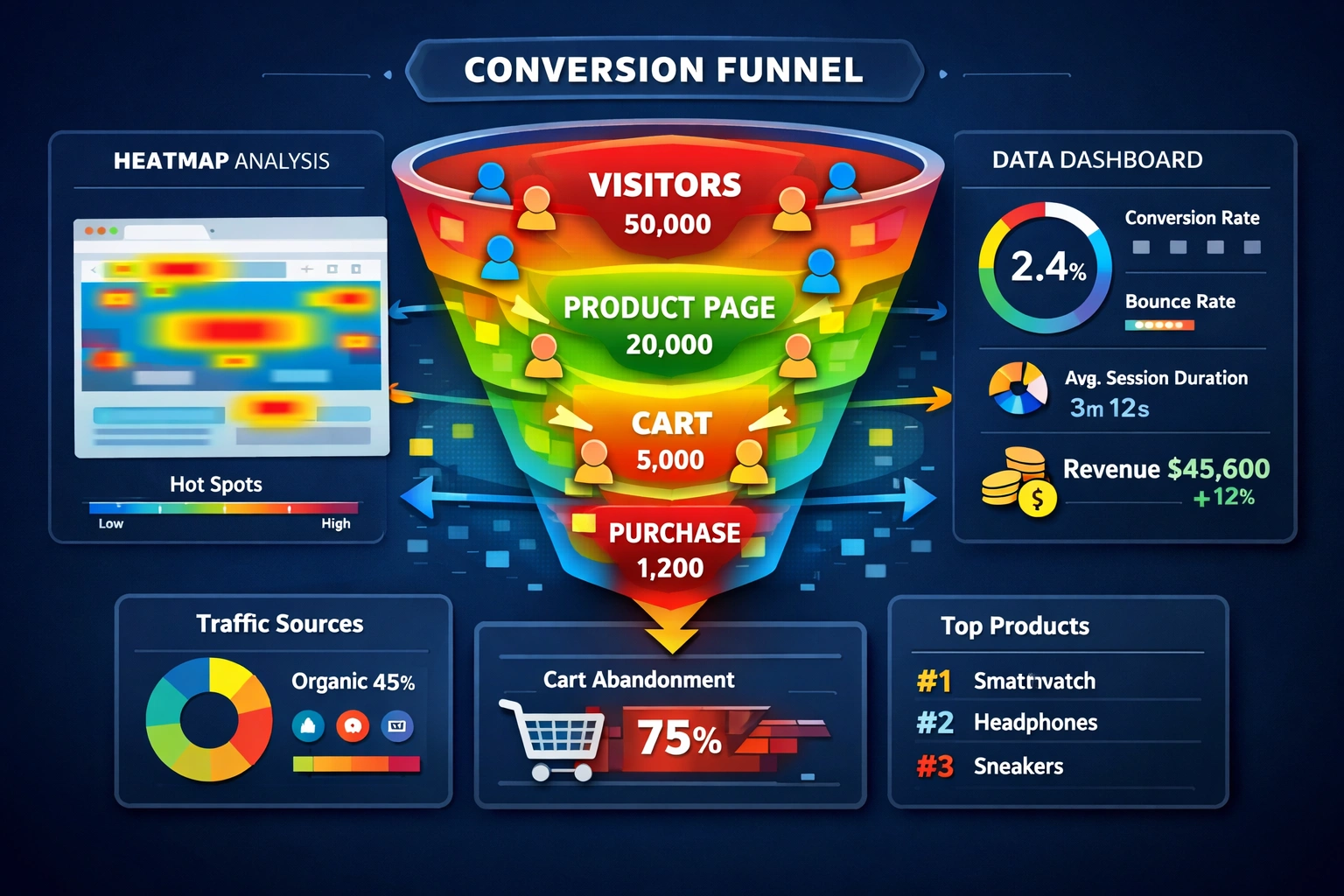
Critical metrics to track:
- Conversion rate: Visitors becoming customers (industry average 2-3%)
- Bounce rate: Single-page visits (high bounce = poor relevance/UX)
- Average session duration: Time spent on site (more = engagement)
- Page load time: Speed impacting SEO and conversions
- Traffic sources: Which channels (organic, social, paid, direct) drive value
- Customer acquisition cost (CAC): Marketing spend ÷ new customers
- Return on ad spend (ROAS): Revenue ÷ advertising spend
Tools like Google Analytics 4, Hotjar (heatmaps) and Optimizely (testing platforms) reveal what works. Weekly reviews and monthly optimizations keep sites competitive.

Foundation 9: Accessibility and Inclusive Design
Websites excluding visually impaired, deaf or motor-disabled users squander 15-20% of potential customers—and violate evolving regulations.
Accessibility requirements:
- Alt text for all images: Enabling screen reader interpretation
- Keyboard navigation: Allowing users to tab through pages without a mouse
- Colour contrast: Text readable against background (WCAG AA standard minimum)
- Closed captions and transcripts: For videos
- Logical heading hierarchy: H1, H2, H3 sequencing for clarity
- Mobile-friendly forms: Large touch targets and clear labels
Accessible sites rank better on Google (SEO benefit) and expand market reach.
Foundation 10: Security, Compliance and Data Protection
Data breaches destroy trust overnight. Security is foundational, not an afterthought.
Critical security measures:
- SSL/TLS certificates encrypting data in transit
- Regular backups (daily minimum for eCommerce)
- Web Application Firewalls blocking attacks
- GDPR/PDPA compliance: Transparent privacy policies, user consent for tracking
- PCI DSS compliance for payment processing
- Software updates: CMS, plugins and dependencies patched within 48 hours of release
- Regular security audits: Third-party penetration testing annually
For Sri Lankan businesses, compliance with emerging data protection regulations prevents fines and reputational damage.
Foundation 11: Content Management and Maintenance
A website with outdated information is worse than no website—it erodes trust.
Ongoing maintenance requires:
- Regular content updates: Blog posts, product descriptions, pricing refreshed monthly
- CMS backups: Automated daily, with versions retained
- Performance monitoring: Speed, uptime and error logs reviewed weekly
- Security patching: Updates applied immediately
- User feedback integration: Customer reviews, survey responses informing improvements
- Seasonal updates: Refreshing layouts for holidays, promotions, trending topics
Assigning a content owner—whether in-house or external—ensures accountability and consistency.

Foundation 12: Multi-Channel Integration
Successful websites don’t exist in isolation; they integrate with social media, email, apps and marketplaces.
Essential integrations:
- Social selling: Shoppable Instagram posts, TikTok Shop links
- Email marketing: Automation workflows for cart abandonment, post-purchase, re-engagement
- CRM systems: Centralizing customer data for personalization
- Marketplace syncing: Updating inventory across website, Facebook Marketplace, local platforms
- SMS/WhatsApp: Order tracking, promotional alerts via preferred channels
- Analytics dashboards: Consolidating data from all sources for holistic ROI
Integration unifies the customer journey, reducing friction and increasing lifetime value.
Building Your Competitive Advantage
The websites winning in 2026 obsess over fundamentals: understanding users, removing friction, earning trust and optimizing relentlessly. They balance aesthetics with function, speed with feature-richness, automation with authenticity.
For Sri Lankan businesses launching or upgrading eCommerce sites, partnering with specialized web design teams ensures these layers work in concert. Professional expertise in eCommerce website design and development in Sri Lanka—from UX/UI through backend systems, SEO strategy and ongoing optimization—accelerates your path to profitability.
Explore how tailored, professional eCommerce website design and development can transform your online business by visiting https://www.joomlasrilanka.com/ecommerce-website-design-development-in-sri-lanka/.

References
- https://profoundprojects.com/guides/11-tips-for-building-a-successful-business-website/
- https://en.ryte.com/magazine/website-conversion-optimization/
- https://www.linkedin.com/pulse/ultimate-2026-website-checklist-14-essential-features-saita-%E6%96%8E%E7%94%B0–4ceic
- https://blacksmith.agency/resources/web-development/essential-website-features/
- https://clevertap.com/blog/what-is-website-conversion-rate-optimization/
- https://tectera.com/how-to-create-a-website-in-sri-lanka/
- https://seeresponse.com/blog/top-reasons-business-needs-website/
- https://www.invespcro.com/blog/the-5-key-conversion-optimization-factors-that-lead-to-great-success/
- https://www.srilankahosting.lk/post/how-to-build-a-successful-client-website-key-tips-and-strategies
- https://elementor.com/blog/most-successful-website-ideas-to-make-money/
- https://vwo.com/conversion-rate-optimization/conversion-rate-optimisation-tips/
- https://nfinitytech.tech/blog/post/ultimate-guide-web-development-sri-lanka
- https://www.wordstream.com/blog/conversion-rate-optimization-marketing
- https://www.axongarside.com/guides/perfect-website-in-2026
- https://blog.subscribers.com/conversion-optimization-ecommerce